> But it wasn’t strictly an “everything is bigger in Texas” ethos that caused Houston to sprawl the way that it does. Rather, Cold War–era urban design philosophy in the U.S. prioritized sprawl because older cities that had urbanized pre–World War II—New York, Chicago, Philadelphia, and Detroit—were seen as being susceptible to nuclear strikes. Less-dense cities such as Los Angeles and Houston were less likely to be targeted for a nuclear attack. Sprawl was a deterrent against Soviet aggression.
That's the first time I've heard this theory.
Would that have worked though? I don't know much about nuclear deterrence, but I'd imagine if the USSR already managed to evade the defenses and other obstacles and destroy the city center in a nuclear strike, it wouldn't be a lot of additional effort to send multiple rockets instead of only one and also target the suburbs.
Not to mention that fallout, breakdown of infrastructure, disease and hunger that followed a strike would affect the entire city in any case.
As a decidedly amateur historian with interest in this area, I think that claim is true on its own but also does not tell the entire story.
It is true that decentralization was viewed as a major component of nuclear survivability, particularly in the earlier part of the cold war. This was the time period during which the FEMA (today's name) crisis relocation program was being devised, for example, and the high cost and complexity of crisis relocation (which, in an earlier form, was a major motivation for the Eisenhower freeway system, to the extent that it's probably fair to say that it was the main motivation with materiel movement as a second) served to highlight the inherent vulnerability of dense cities and keep it very much in the minds of government planners. Decentralized cities had an inherent advantage to planners in that money could be saved on crisis relocation efforts. Of course the crisis relocation program was never fully implemented, but the way of thinking was fairly influential.
The federal government had an enormous role in suburbanization of US cities in many, many ways, which is actually part of what makes it hard to address this point. Support for suburbanization was not coming just (or even primarily) from FEMA, all kinds of federal agencies had a hand. Much of the urban renewal work of the 20th century took the effective form of relocating poor people to the suburbs and replacing their inner-city housing with industrial/commercial/transport, for example the Model Cities program of the late '60s. This was in part a result of the general feeling that the inner city was where poor people lived and so improving their economic situation required getting them out of it, part of it was merely the practical issue that substantially improving a dense area is a lot more expensive than razing it and build something new there. I don't know if these programs were strongly influenced by crisis planning, they probably were at least in part, but it seems unlikely that crisis planning was a much bigger influence in federal advocacy of suburbanization than the more organic trends of white flight and urban decay that came out of a set of race and class relations, in a potent combination with some simple budget and timeline considerations.
My point is that nuclear planning was a factor, but the massive suburbanization of the postwar decades originated from many factors out of which nuclear crisis planning was only one, and I'm not convinced that it was one of the bigger ones in the end. Yes, the Bulletin of the Atomic Scientists very openly advocated for suburbanization of cities and that view was influential, but at the same time so much of suburbanization was motivated by a new vision of the American dream that came out of the peculiarities of post-war economics and demographics, racism, the radical popularity of the automobile (which not only enabled low-density areas but often required the destruction of high-density areas to provide freeway access to business districts), and probably at least a few other things.
Any claim that "urban sprawl is a result of x" where X isn't a list of things is probably pretty hard to defend. A complete change in not just urban planning but people's patterns of life tends to require a confluence of factors.
This is a really great response. I think there are a ton of both selfish and altruistic reasons for the urban sprawl that is Houston. I grew up here (Alief area) and that was the burbs when I was young. (It’s about 15-20 minutes drive from downtown) there was a 10 or so mile gap between where I lived and Sugarland. Now it all runs together. I now live due south of Katy in an unincorporated area about 40 miles away from downtown Houston. Land and housing is still relatively cheap here but it’s filling out every year.
I say that to say this- I didn’t move way out here to get away from some ethnic group or to some other insidious reason. I moved here because I have a large (blended) family and we wanted to own land. It’s a popular narrative to blame sprawl on racism or living above your means. I think the real reason is way more boring than that. Move away from a population center and things get cheaper. Gas is cheaper. Groceries are cheaper. Price per square foot is much cheaper. Those who are upper middle class can live well in the sprawl so of course they do. I have neighbors of every race religion and culture here. They all want the same thing- decent schools elbow room and some fresh air...
Right, and this is a big part of the post-war economics. After WWII a huge number of people were looking to buy homes in an unusually short span of time, and they pretty much all wanted a "typical American home" with lawn and fence. On top of this, there was a large workforce available that basically kickstarted the American homebuilding industry as we know it today, and made buying a brand-new home a very affordable and attractive option.
And what do you get when you have a huge number of people looking to buy brand-new houses? Urban sprawl, there's not really any way to avoid it.
Cheap land and big house is a huge draw for sprawl.
The problem is this is a fundamentally unsustainable proposition. The US is hitting those problems now and it's not pretty. It's not just gridlock but problem that once things stabilize, maintaining sprawl costs more than maintaining a compact city[1]. The roads and the schools in the suburbs are often good only when they're new - once they age, the problem become visible (California is harbinger for the rest of sprawl land, this state has the older sprawl, remember). Poor services can cause an area of sprawl to become undesirable and then it's hard to recover - public transit is hard to add when distances are large but you can still wind-up poor people lacking vehicles in the hinterlands.
It seems like there would be solutions to most of those problems. Roads are long due for a replacement but something more efficient and cost effective. Utilities are already moving towards decentralization with electricity leading the way but sanitation is on the horizon (see Bill Gates efforts). Depending on the outcome of COVID schools are going to be radically transformed. I think there’s enough energy pushing away from city centres right now to fuel a renaissance of the suburbs.
Roads are long due for a replacement but something more efficient and cost effective.
What could that possibly be? I don't know of anything even on the horizon. Rails and steel wheels are more energy efficient but far more costly to build and maintain. Other nations use rail well by ... not having sprawl. Suburban sprawl essentially rests on the private automobile. As the gp essentially said, the draw of sprawl is a big house and a car, which can be nice 'till your whole planet is on fire and you're choking in rubble (I live in California, can you tell - But Texas will notce climate change too, if they haven't). A road is a just a flat piece of ground, it's pretty hard to find something simpler. Freeways are cheaper to build than railways. But the cost of rebuilding gets huge.
So basically, there are not solutions to these problems. We've basically hit Decline of the Roman Empire levels here. That empire took hundred of years to fall. I'm hoping things last past my lifetime.
I grew up in Alief too, back when you had to drive past miles of farm fields to get there. We moved there because my dad, a pilot, flew out of Andrau Airpark. (Also, seeing your post history, I am a friend of Roger Linn.)
The INTERESTING QUESTION is did the Federal Housing Administration prioritize white wealth and lives by moving them into an area less likely to get nuked by the USSR?
Also kudos for not being a racist...
But you might want to take a look at history. The US government actively encouraged urban sprawl with low-cost loans and redlining starting with Roosevelt and the New Deal.
"Beginning in 1934, the Federal Housing Administration (HOLC) included in the FHA Underwriting Handbook “residential security maps” used to help the government decide which neighborhoods would make secure investments and which should be off-limits for issuing mortgages[...] Green areas were were explicitly homogenous, lacking “a single foreigner or Negro.”
> crisis relocation (which, in an earlier form, was a major motivation for the Eisenhower freeway system, to the extent that it's probably fair to say that it was the main motivation with materiel movement as a second)
President Eisenhower supported the Interstate System because he wanted a way of evacuating cities if the United States was attacked by an atomic bomb.
President Eisenhower’s support was based largely on civilian needs—support for economic development, improved highway safety, and congestion relief, as well as reduction of motor vehicle-related lawsuits. He understood the military value of the Interstate System, as well as its use in evacuations, but they were only part of the reason for his support.
Defense was the primary reason for the Interstate System.
The primary justifications for the Interstate System were civilian in nature. In the midst of the Cold War, the Department of Defense supported the Interstate System and Congress added the words “and Defense” to its official name in 1956 (“National System of Interstate and Defense Highways”). However, the program was so popular for its civilian benefits that the legislation would have passed even if defense had not been a factor.
Yeah, I'm really not sure about this - stories of the strange history of the Eisenhower freeway system are extremely common and there's just a surprising amount of myth around them, like the airplane landing thing that we've seen elsewhere in the thread. It's probably unnecessarily conspiratorial to think that the motivations were anything other than what was officially said (e.g. economic advantages), but I give a certain weight to evacuation as a motive because the vast majority of the efforts made towards survivability were remarkably secretive and it was common, at the time, for the government to use cover stories as justification for survivability efforts. Consider, for example, how FEMA used the FBI as a "front" for the crisis relocation program in order to deny their involvement. It's the kind of secret-keeping that seems really pointless and strange now (how much does it even matter to anyone if it's the FBI or FEMA inventorying relocation sites?), but is an artifact of the ultra-paranoid and minimally accountable atmosphere of the time. Most of these things remain pretty secretive today, not necessarily because there's some ongoing push to keep it a secret, but through the more boring mechanism of once secret, now obscure documents being hard to get declassified.
So I sort of suspect that evacuation was a bigger factor than the government admits, but that's purely speculative. Just like suburbanization there are definitely a lot of reasons the interstates happened.
It’s really common for decisions to be made for more than one reason, even if some of those reasons are just advantages brought up during the planning discussions. I can easily see the defense motives as being one of the many factors involved in the freeway development.
Right, and if my borderline conspiracy theory that evacuation was a bigger factor than we know today is at all true, I'm not saying that the federal DOT is lying to us today or anything. If there was a considerable FEMA influence in the motivation and design of the system, staff today probably just don't know about it. A lot of this stuff happened in face-to-face conversations, a lot of the documentation was classified and by the time it hit the DECL ON it was moldering in a bankers box somewhere... the same reasons that a lot of stuff about the relocation program isn't very well known today despite it being declassified. One of the consequences of secrecy is that the whole thing is more likely to just be forgotten as decades go by and the people who were in the know cycle out. And FEMA and its precursors seemed to have a particularly weird and insular inner culture that makes them hard to talk about from a historical perspective today.
I mean, you can just read the original text. Section 108(a):
>It is hereby declared to be essential to the national interest to provide for the early completion of the "National System of Interstate Highways", as authorized and designated in accordance with section 7 of the Federal-Aid Highway Act of 1944. It is the intent of the Congress that the Interstate System be completed as nearly as practicable over a thirteen-year period and that the entire System in all the States be brought to
simultaneous completion. Because of its primary importance to the national defense, the name of such system is hereby changed to the "National System of Interstate and Defense Highways". Such National System of Interstate and Defense Highways is hereinafter in this Act referred to as the "Interstate System".
> Support for suburbanization was not coming just (or even primarily) from FEMA, all kinds of federal agencies had a hand.
There were also non-government actors pushing this - banks redlining the suburbs in order to achieve soft segregation in areas without formal Jim Crow laws on the books, for example.
The legacy of this is the most segregated city in the US, Milwaukee, is in the north, and a major cause was redlining.
different times, different threat models. I think we may as well see a city design emerging which would be taking into account aerial viral spread, remote work/study, etc. which would affect density, transportation, etc. Deepening stratification of society will naturally generate even higher social tension gradients which may present a potential threat to social stability, and thus it may require even more intentional measures in the future city designs to support social stability in the face of such gradients. I think we can see city designs addressing such emerging trends as autonomous delivery/transportation (which naturally plays well with the stratification), policing and public safety in general - i.e. more conductive to total surveillance, robot based policing (how about that one at Shoreline Cinema 16 or even those Starships crawling on Castro - today delivering pizza it'd politely wait for you to let him pass, yet i'm sure that while waiting it dreams about tomorrow when painted with police insignia it'd be forcing its way though the crowd by throwing tear gas and delivering taser jolts :) and making it easier for containment of protest and terrorist activity.
Part of this is brinkmanship. Even if there was no practical way this would improve even short-term survivability, if the Soviets believed that the US believed this would work, that would be enough to show the US would not be cowed by their nuclear arsenal. It was also a way to reassure US citizens that we were not completely vulnerable to nuclear annihilation. Same with backyard fallout shelters and teaching schoolchildren to hide from nuclear explosions under their school desks--the original school shooter drills.
Any way you slice it, nuclear deterrence, missile defense, containment theory and more generally any initiative motivated by the fear of imminent nuclear holocaust and the Red Menace were huge windfalls for industrial corporations from the end of WWII onward.
It was an effective way to siphon huge amounts of money from the postwar federal coffers for corporations that had made bank during the war, but were now left to justify why the government should continue shoveling money at them.
Now, this may not be the case for Houston's interchanges in particular, but it was certainly the case for many such endeavors going forward for decades. See also: SDI ("Star Wars"). And of course, there were other factors like suburbanization/white flight and the ascendant automobile industry. But all of these potential motivators were (are?) very entangled and hard to fully extricate from one another.
Quite interestingly, the social aspects of urban sprawl was completely left out when designing post WW2 cities.
When people think about beautiful cities, they would mention Venice or Paris or Rome. All these cities were built for 'foot traffic' which still works perfectly fine nowadays. In those cities, the elderly and children do have an environment to move around by themselves and socialize freely.
When it comes to planning cities for people, it is worth checking out Prof. Jan Gehl: https://youtu.be/9_x5Hor2MP8
Rome is all but working perfectly fine, with commuter traffic locked almost daily by the tiniest fender bender happening on the highway around it
Venice is likewise a mess, situation was so bas they built an highway to go around the existing highway that corrected it to the nearby areas, and the lack of easy mobility in the city center is fuelling a severe living cost inflation
and how are you supposed to go to work on foot? neither the job nor the house market is flexible enough, especially now that airbnb 'disrupted' traditional renting in touristic cities.
Yah, bcs all new structures built post WW2 were built for cars and not for people people move at 3mph, not 60mph.
Rome could have invested in public transport instead of building highways. No one would be stuck in traffic. Instead, they used public space for cars. The old parts of the city though which are walkable work perfectly fine.
Venice does have great ferry service and traffic in the city is almost non-existent due to lack of cars.
so what's the alternative? build houses right on top of factories? pact stile mass transit with strict worker<>factory allocation?
there's zero chance mass transit can accommodate people's needs, even if you somehow solve the shopping issue with local markets and fixed item prices, the job<>house graph will always look like a fractal set of overlapping stars.
cars is one of the most important social equalizer of this and last century. it allows people from basically all social status to move themselves, their family and their belongings at any time in full autonomy, enabling them to find houses and jobs in the most economical and convenient places.
private cars win over public transit because it's a better product. the only way for public transit to compete is to mandate laws to make cars comparatively a worse product, which is fundamentally anticompetitive - once public transit become monopolistic, once the company owns a tract, they can abuse their position deciding pricing and timetables.
even in traffic, private cars offer a better experience: people are in their own space, under a roof from start to finish, with their preferred temperature and away from both obnoxious or influenced people.
forcing mass transit trough legislation will surely have some short term benefits, but also:
- more class divide between the richs, that will always be able to afford a car, and the poors who won't
- massive gentrification of well connected areas, while the poors get pushed out to where service is of less quality
- dependency of the poors to expensive third party services on any occasion they need to move themselves or their goods across a non serviced destination. rentals is not an option: rentals need a credit card, and guess who don't own one?
- dependency on public transit times. have an unusual work shift or need to visit parents? get prepared to wait in the open under the cold or rain. need to get your child out of school in a down hour because he's suddenly ill? too bad, transit only gives peak service at peak hours.
of course there's situation where mass transit gets convenient, like large cities where a significant percentage of the population shares the same source/destination points, at which point people will use it naturally on their own.
opposing private transit is going to destroy an important achievement of modern society, the car has been a great economical equalizer and still is. market, after all, need customer flexibility not to be captured. pollution is something to be solved with more efficient cars and better technology all around.
it'd be like discovering tomorrow that soap pollutes: some will want to force everyone to smell, some will create a better soap.
I think it's quite odd we nowadays think cars are the only possible form of transportation. We are not born with 4 wheels underneath our butt.
The alternative is to build structures build for foot or bicycle traffic. Everything within 10k can easily be reached by either bicycle or foot traffic. By building infrastructure for cars, you create distances which are for cars only. They would otherwise not exist.
> enabling them to find houses and jobs in the most economical and convenient places
That's only possible due to the external costs of cars not being accounted for. Burning dinosaurs and destruction of nature is nowhere to be found in cars. If you would price cars accordingly, we would start planning differently.
> once public transit become monopolistic
We already have the same monopolistic issue just right now with cars as the only means of transportation. Without cars, you're not able to move in large parts of the U.S. This excludes about 50%+ of the U.S. population (children < 16yo, people who cannot afford cars or cannot drive themselves due to health reasons).
> private cars win over public transit because it's a better product
Why are cars a better product?
Commute and travel time are a huge economical factor destroying time. They take up loads of space and require infrastructure and maintenance paid by society.
> dependency on public transit times.
That's a political issue which could be solved. Most of the money spent nowadays is spent on parking spots and car roads. If you would spend the same amount on public transport, you could probably run a train every 5 minutes.
> too bad, transit only gives peak service at peak hours.
That's also how we design our roads. They need to accomodate peak traffic at peak hours. Otherwise they're an unused piece of asphalt.
> the car has been a great economical equalizer and still is
Again, not taking into account external costs. Road traffic kills ~ 1.2M people each year insuring even more which do have a massive impact on the health system.
> pollution is something to be solved
By solving pollution but still focusing on urban sprawl and keeping traffic as-is, we will do the wrong thing better. That's an achievement but not solving the issue.
Your argument still doesn’t make a clear case for removing cars. All those problems could also be solved by improving cars and infrastructure which has the added benefit of not completely demolishing and rebuilding around a system where you have to schlep your groceries up a hill in the rain on an old bicycle.
a) keep everything as is. Leave up to 80% of public space to cars (as in L.A. for example), destroy all social interactions which could otherwise happen in those places, increase commute time due to cities designed around long distances and destroy our environment.
b) buy a new bicycle and a good rain coat, use our feet, expand public transport, improve our wellbeing by doing some exercise, reduce obesity and diabetes, socialize in public space again and save tons of tax payer's money. Whilst saving the life of 1.2m people.
B only applies to relatively wealthy, childless people living close to where they work.
A is a straw man. There’s no innovation there. We need to redesign roads so that they are invisible and uncongestible. We either have to do personal air travel, which we don’t have the power density for yet or underground which is looking more promising. All people moving cars need to be electric and self driving. A car should be like a universal elevator, just get in and push a button.
That’s the best option, 0 time dedicated to piloting your body through space and you’re able to live anywhere and work anywhere.
Many/most flats in those cute old European cities have windows directly over a street. You can have cars making noise and pollution literally within 5-10 meters of your window. This is bad for physical and mental health.
Soviet-style housing planning is a good middle ground. There, most flats can enjoy silence (you only hear cars that belong to your neighbors and no passer-bys) and still the districts are planned for walkability and public transport.
This is not a problem of houses built that way since the were built pre-car times to allow max light into apartments. The streets back then were also a social aspect of life where we met people and could interact with each other.
Then came a time we handed over streets to parking spots and some folks driving at 50km/h and faster. Social aspects have been gone.
We should not build our apts for cars and align to them. If cars are loud and noisy and destroy our social life, we should focus on solving the car problem and not trying to build around cars.
> This is not a problem of houses built that way since the were built pre-car times to allow max light into apartments
Not the case in most of Europe IMO. The apartment buildings were built along very narrow streets to either fit inside perimeter of city walls or (later) because real estate was expensive. Due to narrowness of roads, these apartments are not very well lit and are depressing (you can't see the sky through the window, only the building across the street). Here in Poland, it basically wasn't until central urban planning by communists until we had cities which are livable, car or no car. This is reflected in real estate pries, where apartments in the old, historic buildings can be cheaper (despite often being right in the city centers) than in the (much denser) soviet conglomerates.
> Then came a time we handed over streets to parking spots and some folks driving at 50km/h and faster. Social aspects have been gone.
Even cars at 30 km/h make plenty of noise (when accelerating to that speed). I'm not sure what you mean by "social aspects" of streets?
Social aspects in the sense of that we nowadays use them for cars only. Back in the days people traded on streets, had cafes and social interactions. Kids could play football and learn how to cycle. That's all used up by cars with all the externalities that comes with it such as dirt, noise, wasted space, deaths by accidents and air pollution.
Not to forget: streets were used that way until ~80 years ago. We just can't remember them any different any more.
> Social aspects in the sense of that we nowadays use them for cars only. Back in the days people traded on streets, had cafes and social interactions. Kids could play football and learn how to cycle.
I still see some of that in my dense city with car traffic. Obviously, this now happens on the sidewalk and not on the street itself. The major difference is kids not playing on the more major streets.
well the '70s blocks in Poland do have quite some shared greenery, at least the southern part were I've been extensively, but I saw them also up north, even in the outskirts of 'special case' cities that have had their historical centers preserved or restored like Gdansk [1] or Torun [2] - that's what planner can do to encourages a local and social aspect to the local neighbors
but still it doesn't solve working places interconnection in a way that makes walking nor public transit satisfactory.
lol somehow someone with an axe to grind has been following me and downvoting all the posts I make as if that proves anything.
interestingly even factual, sourced post like this were victims to trolling; I though there were protections to anti social behaviour in place, but alas, here we are.
This sounds fairly dubious. There was a period between sub-megatonne pure fission warheads being standard and multi-megatonne 'hydrogen' ones, but it was under a decade. That seems like a very narrow window to change how cities were planned.
Urban sprawl happened because people were tired of living on top of each other, and cities that had the room to expand used it. There was also another name used for that sprawl, white flight. I think we're seeing some of the results of that today.
I've always thought it was funny how whites moving from the city to the suburbs is bad (white flight) and whites moving from the suburbs to the city is also bad (gentrification).
It makes logical sense. You cause problem A by leaving, and then in coming back you cause problem B. The same thing happened with the Iraq War -- we caused lots of problems with the unnecessary invasion, then caused more problems by leaving. It's lose/lose. The only winning move was never to play. In the white flight analogy, the only winning move was never to seek segregation from moving out of the cities in the first place.
In the same way, global warming is bad, but global cooling would be much worse. It's climate change that's the problem, disrupting human patterns that we've got used to.
When an area is ceded by one group, the vacuum will always be filled by another group. When the people that left try to reclaim that territory, friction will always happen. If the current occupants of that territory have no desire to relocate , or have no where else to relocate to, or have no means of relocating if it were possible then there will always be friction. It's repeated over and over through out history.
Right. One way to solve this is moving away from the identity politics (why is that group moving here) and tell people who want to “maintain their neighborhood character” to pound sand.
What does "pounding sand" actually mean in this context though? Considering that the people in question are complaining because it's already happening to them? You can't just tell people to stop complaining about grievances.
People are free to complain. But the challenge is (at least in CA) is that the most minor complaints will hold up desperately needed housing projects.
Legitimate complaints (e.g. this will mess up traffic) are fine. "Neighborhood feel" complaints (e.g. this building is too tall, it doesn't fit the neighborhood character) should be met with "thanks for your feedback, but that's not a good enough reason".
Of course if there is widespread consensus among voters on how they want their city to be developed, fine. But right now, the current system allows a handful of very vocal opponents to development to derail new housing.
Agreed with you on all points. Unfortunately housing policy decisions are made at a very local level in the United States, and local politicians are accountable to a very small number of squeaky wheels. And they can't afford to ignore even a few highly pissed-off wealthy voters. So what you end up seeing is that the wealthier, whiter people living closer in have enough political power to successfully stop new development, and then the development that does happen occurs in farther out areas that are poorer and blacker/browner and have less political say, and that's when you get gentrification. Trust me when I say that East Bushwick is not anyone's first choice for erecting new luxury apartment buildings, it's just that SoHo and its ilk have successfully been fighting all new construction for decades running.
That's why doing housing/zoning policy at a much higher level, ideally statewide, would be much better. Japan has that (for their equivalent of states) and you don't see these distortionary effects. Then you'd see the development happening where it really truly does make the most sense, and as a side effect gentrification would be lessened because not as much new construction would be happening in farther out marginal neighborhoods because the demand would be satisfied closer in. Incidentally this also has positive benefits in lower commute times and less environmental impact.
I've always seen gentrification as more a symptom of a problem, rather than a problem itself. After all, it's not the appearance of a higher economic class that's bad; it's the forceful displacement of the lower economic class, which may or may not follow. I've seen both scenarios play out in both urban and suburban areas, depending a ton on willingness to allow new construction and pre-existing home ownership rates.
In that case, vulnerable populations in gentrifying neighborhoods were no more likely to leave than equivalent populations in non-gentrifying neighborhoods.
For me, the obvious mechanism is that, well, it's true that people who leave may often blame gentrification / increased costs for their departure. But on the other side of it, without gentrification people may still have left, but for different reasons: to get away from crime, to go somewhere with more amenities. It's possible that these two tendencies somewhat balance each other out.
Seems like the way to disentangle the two is to look a the people replacing those that move out. If they're roughly the same economically then it's the churn of being a poor person in a capitalist society if the income is going up particularly if it's a sharp increase and rents are rising then it's gentrification.
The harmful displacement effects of gentrification are really a symptom of unresponsive city planning and zoning. If governments were more flexible and faster to adapt to changing circumstances, gentrification could have been positive-sum.
The appearance of a higher economic class leads to lopsided political power. It's the lopsided political power that then leads to the displacement of the lower economic class from any desirable area.
That's a pretty generous interpretation of white flight. You leave out the redlining and segregation that were huge factors in white flight and subsequently reverse white flight and gentrification.
There's nothing stopping you from moving to Detroit or Baltimore or East St. Louis. Why wouldn't all the progressive people move there if the housing is such a bargain?
Entirely depends on where you're at. Overall the US added nine million new housing units from 2010-2019, while adding only about 19 million people. For housing that's somewhere between keeping pace with and exceeding population expansion. Obviously not all of that supply expansion goes to family housing, however not all of it needs to either, given that's only a two to one ratio.
Location location location. A lot of that new housing is not where it's actually needed most. If you need it somewhere within commuting range of your job, but instead it's 18 hours away and several states over, it's really not doing you any good.
Part of the problem is that Black people never had the opportunity to buy the properties they occupied, even at depressed prices when those properties were undesireable. So when gentrification occurs, rents go up and they're shut out. If there wasn't a massive wealth gap to begin with you'd see more Black homeowners in gentrifying areas making bank on their massively appreciated houses.
In some cases, it's worse. Some families that were able to buy properties have had them for so long they only owe taxes each year. Then some developers petition the city that those properties are vital, and they are granted eminent domain. Even if they are paid the amount of the suppressed values of their property, there's no way they can afford to do anything with that money. Plus, they are now forced out of the property that has been in their family for a long time.
Yes. One of the sticking points to 'build that wall' is the land they want to build the wall is owned by private citizens. Oil & Gas, transportation, etc have all used it to get the land.
I remember Heinlein talking a lot about the decentralization of cities concept. A bit of googling leads me to Sumner Spaulding, who was apparently a large proponent of decentralization to avoid nuclear disaster.
That would be a lot of ICBMs. The city center is not residential. Most people that work in the city center for city's like houston or LA commute from one of many different cities. Just to wipe out half of houston you would need to simultaneously strike at least a dozen different locations. The idea was, if there is a missile on the way or if other cities are being attacked, the sprawl would allow evacuating a lot of people.
I do think it is an effective strategy. Look at Hiroshima and Nagasaki, tokyo and kyoto were spared for different reasons but they were spared. No sense in wiping out every single city. For the US, a nuclear attack would probably be against symbolic populated cities like new york, san francisco or chicago, ideally the US would surrender after that point and if there is no surrender, military targets would make more sense (hawaii,san diego,san antonio,anapolis,etc...).
The idea is, if you have a small number of targets to defend you can defend them better. Just like with infosec, you want to reduce attack surface so you minimize exposed services or inputs.
Tokyo was not spared. On March 9-10th 1945 it endured the most destructive and deadly air attack in human history, killing somewhere between 90-100,000 people (https://en.wikipedia.org/wiki/Bombing_of_Tokyo_(10_March_194...). Perhaps by August 6th when the atomic bomb was dropped on Hiroshima, the major targets in Tokyo had already been destroyed.
Every single city that was targeted had multiple rockets assigned to them. Each rocket was just a launch vehicle similar to SpaceX launching Falcon9s with multiple Starlink satellite, each nuclear rocket was equipped with MIRVs (multiple independent re-entry vehicles). So one rocket launched would result in multiple targets. You could target each MIRV at different parts of the suburban sprawl. Pretty damn effective.
MAD did not allow for "surrender". You either wipe out your enemies military completely before they manage to launch most of their rockets, or you both die. There is no targeting of symbolic locations and then calling it quits.
MAD is worse case scenario right? I think in reality if nukes are used both sides will be aware of MAD and it will be to compliment conventional warfare.
The strategy, if it existed at all and it isn't just a post-hoc explaination, was probably designed around the time the strategic bomber was the primary, and only, method of delivery of atomic bombs.
Good point, I think rockets that re-enter from space were not a thing prior to the 60's and even then I bet they didn't expect thousands of them owned by multiple nations.
I did not know about MIRVs, this comment thread has been educational.
I did not know the extent but I was aware they were bombed like berlin and london. I meant when they planned the nuke attack Tokyo and Kyoto were on the list but they were removed for different reasons.
This was pretty much the strategy towards the end of the war. More than 60 Japanese cities were firebombed, civilian casualties probably exceeded those killed in Hiroshima and Nagasaki.
Sparing Tokyo worked because Japan didn’t have the capability to retaliate. Any launching during the mid-to-late Cold War would have been a massive first strike and possibly a retaliation at the same scale. In the early Cold War it may have been a reasonable strategy, but as another poster notes that’s a very narrow window for changing how a city grows.
Even if there was an effect, I’d be very surprised if the signal wasn’t wiped out first by railroads and then by cars.
Tokyo and other Japanese cities were burned to the ground with mass firebombing, not spared.
The goal was to get Japan to surrender, and Emperor was considering it. His generals were fanatically opposed, and if the Emperor were to be killed by the bomb, they would fight to the last man, woman and child.
US administration could then pick it's poison - leave Japan as is, suffer and inflict massive casualties from a ground invasion, or commit nuclear holocaust.
It wouldn't be a lot of ICBMs, actually. In reality, it wouldn't even take a single ICBM.
Playing around on Nukemap, 5-6 800kt warheads are enough to kill the majority of people in Houston and give third-degree burns to the rest. A Russian RS-28 Sarmat ICBM should be able to carry 10-15.
Or, with a single 20 megaton warhead, it would kill 1 300 000 people immediately and injure 2 000 000 people.
I would argue the bomb was only part of it though--the other hazard was area bombing. All of those planners had seen (or participated in) the aerial bombardment of Europe and Japan during the war, and one take-away was that areas with different uses should be separated (like in the sim game Cities Skylines), e.g. industrial zones should be separate from residential zones, and all of the above should be as sprawling and low-density as possible to minimise damage from the air, be it nuclear or conventional. And yes the US highway system started out as a civil defense project as well, modelled on the German 'Autobahnen'.
More than just a theory. When we were clearing out my grandparents’ house we found a pamphlet (I think it was Civil Defence, but it could have been a different agency) which was basically the paper equivalent of a government-issued FAQ about nuclear war. From my own 2020 knowledge of what they knew then, it was remarkably good stuff, written for a general audience. I remember reading it and thinking that the mockery we have for ‘Duck & Cover’ really isn’t fair, at least with respect to this pamphlet: it didn’t claim that a desk would protect at ground zero, but did (correctly) note that the harmful effects of a bomb decrease over distance. I think it was from late-40s to early-50s.
I recall that one of its points was that tightly-packed cities had been susceptible to the conventional bombing campaigns of the Second World War and would be even more susceptible to nuclear bombs, and consequently it made sense to spread cities out.
> if the USSR already managed to evade the defenses and other obstacles and destroy the city center in a nuclear strike, it wouldn't be a lot of additional effort to send multiple rockets instead of only one and also target the suburbs.
Well, it would be superlinear: if you imagine a hex grid of blast radii, the centre radius is one, the inner ring is six (cumulative seven); the next ring is is twelve (cumulative 19); the next ring is 24 (cumulative 43), and so on. 1:7, 7:19, 19:43 — it adds up!
9MT W53 (Titan II warhead): Fireball covers downtown Houston, moderate damage out to the borders of Houston proper, 50% chance of 3rd degree burns as far as Sugar Land or Humble.
It wouldn't have. In case of an all out war each side would send dozens if not hundreds of rockets at each target. US in particular had the problem where each arm of the military(airforce, army, navy and missile command) had their own and completely independent launch plans. So each one would launch their own compliment of nukes at Russian cities. Destruction of your own missiles by the already exploding weapons was actually seen as a significant issue that would lead to loss of many if not majority of weapons. Eric Schlosser's Command and Control is, as always, a great read about this.
In the beginning stages of the Cold War and the start of urban sprawl the threat wasn't rockets but bombers. ICBMs weren't created till '57 and took over the strategic setup for killing everyone in the years after that, so there's a window there for sprawl to be a legit(ish) survival/mitigation strategy.
The US Army hasn't had strategic nuclear weapons in a very long time, if ever. On the other hand, theater-level weapons like the Pershing (10s (mostly) to 100s of kt) do a pretty fair approximation.
I don't doubt someone thought of / would like that idea... but I have trouble believing sprawl really was influenced by some plan involving nuclear strikes.
Yeah you'd have a good chance of having more survivors due to the nature of nuclear weapons, but I don't see that influencing choices like wanting to have a suburban home and etc.
With all claims like this, it’s rarely the case that these decisions were made on the basis of a claim like that but it was used in a compendium or arguments for whatever policy. If you’re a pro-car lobbyist for example, you might as well throw something like that in as it strengthens your case.
For what it's worth, the same thinking was behind the new capital of Myanmar, Naypyidaw. Paranoid military leadership who thought Yangon was too vulnerable to attack, so built a new capital way inland which is massively spread out to make it harder to bomb.
Such a weak argument as we (as humans) just got better at bombing things. More planes + more bombs = problem solved. "You build a bigger shield, we just build a bigger bomb" mentality has to be a core tenet of the military industrial complex.
Actually, modern warframe is all about completing missions while using less bombs and planes. Killing residents may cripple the economy of your enemy but finding the high value targets and only bombing those is cheaper and more effective.
A typical nuclear bomb has a wipe-out radius of 1-2 Km. At 10-15Km radius, you are looking at damages/injuries but not a complete wipe-out. Also residential houses are less susceptible to infrastructure breakdown vs. a high-res building.
I don’t believe it. They had MIRVs even back then. There’s no difference in density between .5 miles and 15 miles. You’re fucked either way with: direct impact, over pressure, and radiation/fallout.
It's one of those hackneyed theories that has a grain of truth in it, but nothing more. Yes, perhaps fear of being nuked drove some people from the cities, but what actually drove a lot more people from the cities was racism, plain and simple. See https://en.wikipedia.org/wiki/White_flight That, a lot more than fear of nuclear war, is what drove suburbanization, along with the rising spending power of the middle class that made a detached home in the suburbs and a car achievable on a single salary.
I do recall a population distribution map of the USSR vs. the US from a book I owned 30iah years ago and they were far more evenly distributed than the US.
I'm very doubtful it would have worked. The USSR had thousands of warheads, they could turn the entirety of every city into glass. I'm even quite doubtful this was a consideration.
I think it's more likely the combined factors of automotive industry lobbying and redlining/white flight that led to the level of urban sprawl you see in the US
>Would that have worked though? I don't know much about nuclear deterrence, but I'd imagine if the USSR already managed to evade the defenses and other obstacles and destroy the city center in a nuclear strike, it wouldn't be a lot of additional effort to send multiple rockets instead of only one and also target the suburbs.
The USSRs guidance computers were quite bad, and reentry would have scattered multiple payloads without those.
Having talked to people in the programs from before the iron curtain fell they got around this problem by building larger bombs so the radius of destruction was larger than the radius of uncertainty around a target, to the point that dead-reckoning was viable.
In short, were the USSR serious about dealing with urban sprawl it wouldn't have taken much effort to build weapons that could vaporize Huston sized cities.
5 Mt is huge, and far bigger than the warheads of most modern nuclear weapons. The one you show is fairly representative of a single modern warhead. Nowadays, and for many decades if you want a large area of effect, you use a MIRV vehicle and pepper the target area. This gives you wide coverage for fewer total megatons and a more compact and flexible weapon system, and hedges your bets in case any of the warheads fails or is intercepted.
In fact big bombs were an early trend for two reasons. One was that the delivery system was expected to be bombers dropping one or a very few bombs with mediocre accuracy and so you wanted maximum destruction from each delivery. The other was that they were worried bombers wouldn't be able to get directly over some targets due to air defences, so you'd drop the bomb short of the target and use the massive area of effect to cover the remaining distance for you.
Nope. Sprawl happens in places where the oil industry runs city planning. Plus, if people cant survive in your city without a car, then that kills off the poor too and drives them away. So cities sprawl to serve oil companies and to exacerbate wealth inequality.
What, you people dont believe me? You seriously think we sprawl to protect ourselves from nukes? Like the enemy isnt just going to launch more nukes, or cluster nukes?
If anything, the sprawl would just make the nuclear strike worse, because there's a greater chance you'll survive and have to live through revelation. Here's how you protect yourself if a nuke is on the way: you duck your head down, and kiss your ass goodbye.
No it's just plain ole racist, classist, corrupt government trying to use fear of Russians to drive oblivious americans who dont pay attention, to buy more cars from their rich motor company friends.
That government is mostly in the past now, but the sprawl is a monument to their philosophy, which was racist, classist and corrupt.
It's interesting that protests generally happen in dense parts of cities. Now imagine a city without a dense part - protesting becomes more difficult. Myanmar's non-democratic military government actually moved their capital from a dense city to a new city so spread out and with no downtown area - potentially to prevent the ability to protest the government.
I don't think that's why Houston is the way it is, and while there is still a downtown there, imagining mass protests in Houston seems much different than Hong Kong - due to the density.
IMO this is part of why why protests started marching down freeways. In LA, if you protest by marching down basically any freeway, you snarl up that freeway (and likely more) for tens of miles, at least (AFAIK).
(the 101 between hollywood and DTLA is essentially a single thing, the 10 between DTLA and West Side, the 405 from culver city up to over the pass in sherman oaks...)
AKA, the "center" isn't geographic, but... transit-based? Arterial?
It also gives a great sense of your own power (which is very important to protest movements) in marching along and shutting down a freeway, which you could never in any other situation just calmly walk down the middle of. Critical Mass is invigorating for the same reasons.
As a commuter nothing would turn me against the protestors goals faster than clogging a freeway. I have a long and frustrating commute and the idea of that commute becoming a multi hour trapped parking adventure after a long day doing a job that is agonizingly depressing is quite souring.
The experience is so decidedly wonderful that if, for example, the protest were a Black Lives Matter movement I would change from a whole hearted support to complete opposition in every objective they promote.
If interrupting your commute is enough to turn you to "complete opposition in every objective they promote," I have a hard time believing you were ever a whole-hearted supporter.
So protests are ok while they don't inconvenience you?
I don't understand what is your point here, protests are supposed to be disruptive, disparaging the audience is not by design, if you feel that way then you don't really believe in the value of the protest, no?
Its like yelling at a customer and slashing their tires only to be confused why that customer doesn't wish to continue being your customer. Then blaming the customer for their lack of commitment and being somehow dumbfounded by their change of opinion.
If that were true we wouldn't need crowds to impose influence. Any one individual would be enough to influence any one other individual on the merits of the argument, but that's not how most people operate. Any attempt to influence is a sell no different than selling a hand bag.
You might disagree with it as a tactic, but I'm not sure how you got to the idea that it's designed for animosity and not influence. Can you read the minds and intentions of the protestors? How would you know?
You do understand how what you perceive and what they intend are different things, right? And that jumping from "it is inconvenient for me" to "they only intend to cause me harm" is a serious leap.
> You do understand how what you perceive and what they intend are different things, right?
If the protestors are utterly incapable of bridging that gap it doesn't matter what their intentions are as they are failing to win hearts and minds. That leap you speak to is only a minor baby step. If they really wanted to convince me of the value of their message they could start by not intentionally pissing me off.
This isn't rocket science. This complete lack of common sense on behalf of the protestors typically indicates youth. Everybody else has since either developed a few drops of empathy or moved on to anything more self-indulgent.
> That leap you speak to is only a minor baby step.
It absolutely is not a baby step. In fact it is a really big deal to jump from your own experience to assuming the intent of other people. That is actually a really fast way to anger people in my experience, because it requires that you pretend that you understand what is going on in another person's head. Saying "your actions caused X" is pretty straightforward, but "you intended to cause X" or "you intended to cause X and X alone" requires mind reading ability on your part.
Again, you can disagree with it as a tactic, I genuinely do not care about that. What bothers me is that you're unilaterally asserting that you personally understand the intention of the protestors, which is quite the assertion, and one that you have only backed up by "this is how I feel about it".
And even if he personally is turned off the issue at hand because he experiences some personal convenience, so what? He's not the target audience of the protests, just collateral "damage" (if you can even call it that). Government officials and all the millions of people reached by news media coverage of the protests are the real target audience. And you can't deny that it's working; year-on-year nationwide opinion polls show an astounding reversal from majority disapproval of the Black Lives Matter movement to majority approval. It's been the most successful modern protest movement going possibly all the way back to the 70s.
So who fucking cares if some people got stuck in traffic. The protests are working, and the people who weren't even stuck in traffic but are complaining anyway because they hypothetically could have been (like this guy) should just be roundly ignored. Listening to their opinions is a terrible idea if your actual intent is to further the movement.
> It absolutely is not a baby step. In fact it is a really big deal to jump from your own experience to assuming the intent of other people. That is actually a really fast way to anger people in my experience, because it requires that you pretend that you understand what is going on in another person's head.
That is not correct. If you are blocking a freeway causing hours of traffic delays then I am not making assumptions about what's in somebody else's head. I don't care what their intentions are. They have made me disgruntled and digusted with their protest message completely alienating me from their cause. From that moment forward I would vote against and fund in opposition to everything they advocate.
As the audience all that matters is what's in my head, which I don't have to guess at. The inability for people to accept that reality tells me the things they are protesting about aren't important to them.
> From that moment forward I would vote against and fund in opposition to everything they advocate.
So given the protests in the U.S.recently have been about the treatment of minorities by the Police specifically the killing and abuse of black people. Are you saying that if you were to be stopped in traffic due to a such a protest you would then support, fund, and vote for more Police abuse and killing of black people? Is that really what you're saying?
That’s literally a different argument. You’ve moved from “they’re intending to cause harm to people like me” to “I believe this tactic alienates people like me”.
As I’ve said repeatedly, the latter is an argument about the efficacy of this type of protest. You’re free to believe that, I don’t care. But understand that “it doesn’t work” is a completely unrelated argument from “its intended to do X”.
The protests are working. It doesn't matter if you hypothetically would be pissed off about being stuck in traffic because of one, they are demonstrably working. So they absolutely continue despite your objections. See:
I think you should take a step back and really consider why you're arguing so vociferously over hypothetically being caught in traffic because of a protest when there are much larger issues at play here.
Neither of your links mention anything related to blocking freeways. Your second link mentions that violent protests are viewed extremely negatively. Where I live blocking a freeway would be viewed similarly. As negative as the numbers in your source suggest doing that a few times would tank support for any protest movement.
Would the moral status of rape, or, say, slavery be any greater if it was written into the Constitution? (Note that one of those was, extensively, written into the Constitution.)
You're just continuing the horrid comparison of somehow equating people exercising free speech with heinous crimes. Stop it. It's not a good look nor a valid argument.
I'm not even going to waste my time explaining how free speech is different morally from rape, because I guarantee that this is crystal clear to everyone else except for you somehow.
Yeah, actually. I saw a huge fucking grin on the face of the guy riding shotgun in the ambulance as the crowd of cyclists parted like magic in front of them and they had a personal escort of two vested corkers. Guy was even filming. They got where they were going faster than if the usual stop and go car traffic had been there.
The great thing about people on foot or on bike is that they can easily get out of the way of emergency vehicles, vs cars and trucks which often can't.
I've experienced this outside of protests. My wife and I were driving somewhere near downtown St. Louis, on a part of the interstate where there are tall concrete barriers between the directions of traffic. There was a complete log jam due to an accident ahead, and we heard sirens coming up from behind us to the left. We were in the left of two lanes. The right shoulder was either filled up or too small (can't remember), so people couldn't really pull right more than a foot or two to allow the ambulance through.
The ambulance didn't let that deter them. They took the foot or two we and the other left-lane drivers could give by getting REALLY close to the car to our right, and used it to careen down the left shoulder, scraping the side of their vehicle along the concrete barrier much of the way.
I'm not talking about emergency vehicles or people who get escorts. I'm talking about the doctors who have to make their own way in their own vehicles.
In the future, it's considered bad form to complain if your posts are flagged. That said, I agree that it certainly wasn't bad faith to argue that in some cases the downsides of protests are worth how vital it is, and it was a very cheap shot.
FWIW, my city had 35% of its population, over half a million people, entirely fill almost every street downtown, and there were no catastrophic events. Worse comes to worst, alternative routes will need to be planned. I think the most catastrophic thing that happened is that the cellular systems crashed, but for the most part GSM still held out so it was okay, and the stores had landlines that were used when worse came to worst.
Same during the Hong Kong protests, I never saw anyone complain about such things, and indeed I don't believe it had catastrophic effects.
You definitely get to supress infrastructure when you have enough people willing to protest.
I don't get it, are you trying to imply that protests should have no disruptive effect? That is a good recipe for complete political dysfunction. Civil disobedience is based upon disruption. It is our right as citizens.
Besides, if an ambulance or doctor needed to go through a protest, the vast majority of the time just asking gets them through.
You have no right to undemocratically wield power over others by physical force. You have no right to force others to suffer to compel them to your will which they did not choose.
Limiting the political engagement of your citizens to only voting in a two party system is madness. When people stop being engaged, and stop voting, and your country turns to shit, I can say that I warned you.
No, seriously, this is insane. You want to, functionally, ban protests. There is absolutely no way you can have a functional country if you can't even have peaceful demonstrations.
If your standard for "hurting innocent bystanders" is to mildly inconvenience some people by causing them to seek an alternative route, then no, it's not possible to have an effective protest under that standard.
The right to protest is generally accepted to mean that people are allowed to walk in the street in an effort to be heard.
I responded to what you wrote, and your arguments fall flat. Even during massive protests with millions of people ambulances get where they need to get and doctors go where they need to go.
When you're blocked on the highway, you cannot leave. You're confined. No matter how sick you are, how hungry the baby is, how hot the car is getting, how low on gas or how late you are for work.
Stop being disingenous about what you're advocating. You're advocating confining people to their cars on the highway. Including old people, little kids, sick people. To force them to listen to you.
You have a misunderstanding of what is legal, what is not, and what a peaceful protest is.
Blocking traffic is already banned.
That's 100% illegal in all cases.
'Protests' which infringe on the rights of others are just another form of fascism.
'My Fascism is Worthwhile' is not a civic or moral argument.
You can protest peacefully, vote, engage in other forms of civic obedience, but you can't do it at the expense of others, full stop.
As soon as someone starts trampling on your rights for a cause you don't agree with you'll scream 'victim' and then maybe have a different perspective.
Walking in the street is not fascism. This is seriously ridiculous. Are you going to claim that the Hong Kong protests, or the Climate Protests are fascists because people were walking in the streets?
> Wait until Trump supporters lock down traffic in LA all day because they legitimately believe the 'election was stolen'.
Good for them? That's a valid protest. You don't have to stay out of the way in the free speech zone. (Not to say that separation is never appropriate, but not most of the time.)
So we can block traffic in LA to raise awareness that 'Aliens are coming'?
No - absolutely not.
Your arbitrary definition of what you consider to be a 'valid protest' is not relevant.
You 100% do not have the right to block highways under any circumstances. Full stop.
You can of course, block highways if you use force to do it, i.e. by amassing such a large, unlawful group so that 'nobody can do anything about it' - which is of course illegal and completely trampling other people's basic rights.
I firmly believe that if you have enough people who think it’s important enough to block traffic to make a point — if their belief is that aliens are coming to destroy earth — they’re allowed to do that. Sure, it’s illegal, but they’ll do it anyways. I think it’s unlikely that so many people will come together to block traffic, but if it’s so important to them, then I’m all for it. They’ll definitely get to make their argument to the news and American people, who get to decide if their point is valid or not. But that’s the point of free speech.
Blocking traffic is not speech, it's physical harassment whose only outcome and whose intended mechanism of effect is to inject suffering into random innocent peoples' lives.
You have no right to do that any more than you have a right to randomly slap people on the street to make them listen to you.
> It's valid to protest things which are not true?
If you set the bar at "your point has to be true before you can protest", then goodbye free speech. Because who exactly gets to decide what is true, and therefore is legitimate to protest over? The government? The media? That is an insanely dangerous power to give any institution, which is why the first amendment is purposefully interpreted to put the minimum number of restrictions on what is forbidden.
Now you're arguing about the difference between civil disobedience (which necessarily involves breaking norms or laws) and simple protest. This is a fair distinction, but genuinely a tedious one. Yes, standing around in the street is illegal, that's the point. We're not going to work out anything new here that hasn't been discussed over the past century.
What I'm reacting to is you setting the bar based on the content of the speech. That is super dangerous territory, one that I would strongly condemn. The moment you say that tactics become legitimate or illegitimate based on the content of the speech, which is something the highlighted quote was saying, then you're heading into the land of no more free speech.
So you fully support anti-abortion protestors blocking the entrance to abortion clinics?
That's 'civil disobedience' and 'breaking the law' for the 'content of speech' (in their view) of 'saving lives'?
Seems pretty legit? Saving lives?
What about White Supremacists burning down 'desegregated schools' in protest of 'desegregation'?
Or some 'burning crosses' on the streets in front of the NAACP? I mean, hey, it's their right to 'protest'?
How about 'Anti-Vaxxer' protesters surrounding evil big corporate pharma research centres and not allowing anyone in or out (civil disobedience) because 'big pharma' is giving everyone autism?
Or a much more mild case: two days ago in Montreal a small group of protestors brought down a national monument, as police watched and refused to intervene.
So how many protestors do I need exactly to tear down monuments? What's the 'headcount' threshold for the Washington monument coming down? I mean, he did own slaves ...
It's not tedious to distinguish between what is illegal and what is not, it's literally at the heart of civilization.
And no - we generally don't care what your 'cause' is - if someone really wants to 'protests' for 'segregation' - that's totally fine, they can make nice placards and sit in the park.
It's incredibly naive to ignore the damage and harm caused to a lot of people in the wake of a lot of unfortunate protests which have turned violent, let alone the problems caused but otherwise more basic civil acts.
There are 1000 ways to protest, if you want to sit on the sidewalk and get dragged away, that's fine, just don't get in other people's way.
This response is so completely unrelated to what I actually said that it’s genuinely hard to respond to. If you want to continue to discuss this matter, respond to what I said, rather than making up what I said and then arguing against it.
AFAIK, the goal is "now things are different", and the tactic at play is "be unignorable".
The impression I've always gotten is that what you're permitted to do when you're doing a legal protest is to minimize the disruption it has, which is (IMO) within epsilon of "make it as ignorable as possible".
Ohio might have a more centralized city center, where LA doesn't, or have other forms of "center" the way the transit system in LA is "central" to the metropolis.
"Some of Haussmann's critics said that the real purpose of Haussmann's boulevards was to make it easier for the army to maneuver and suppress armed uprisings; Paris had experienced six such uprisings between 1830 and 1848, all in the narrow, crowded streets in the center and east of Paris and on the left bank around the Pantheon. These critics argued that a small number of large, open intersections allowed easy control by a small force."
This is pretty widely thrown around, but it should be noted that the central purpose of Haussmannization was public health and beautification: tearing down the slums, building proper infrastructure like sewers and aqueducts, and pretty parks and streets. The article you link to emphasizes this.
The wide boulevards did very little to prevent the Paris Commune, for instance. Napoleon III just wanted to build a second Rome, not some martial panopticon.
The Commune was also fairly unique among French revolts as it did not begin in Paris, rather it was Paris reacting to their emperor getting captured in battle.
There was a bit more than just Napoleon III getting captured. Paris was subsequently sieged and captured by the Prussians. Afterwards, the Prussian troops were kept nearby and occasionally paraded through the streets. The Commune arose also due to power disagreements with the new Third Republic and an attempted seizure of cannons in Paris.
The Paris commune was tripped off by a political failure, a war lost in a single battle, and the siege of Paris by the Germans followed by mass starvation. I doubt that any city design could possibly have stopped the commune from happening.
Not directly related, but the US Interstate Highway system was at least partially designed with military concerns in mind: https://en.wikipedia.org/wiki/Interstate_Highway_System#Hist... . I'm reminded of it every time I see military vehicles on the highway.
Obviously not the same thing that you're talking about here - but just interesting to me, and vaguely related!
If I'm not mistaken, the 5-star logo only applies to sections of interstate highway that have at least one mile of level and straight road in any given 5-mile stretch. The idea was that an "Eisenhower Freeway" could be used as an impromptu landing spot for Air Force planes. While I'm sure this ability was tested at the beginning I don't know if there are regular drills and exercises making use of this feature.
This is an urban legend debunked in the linked Wikipedia article: "According to urban legend, early regulations required that one out of every five miles of the Interstate Highway System must be built straight and flat, so as to be usable by aircraft during times of war. There is no evidence of this rule being included in any Interstate legislation."
The Eisenhower Interstate Highway System is designed for military purposes only in the sense that it's very important to be able to quickly move your troops and materiel around to where they're needed (i.e. logistical reasons). In other words, it's important to the military for the exact same reasons that it's important to anyone else.
It has some merit. Sweden built an entire system based on road bases to deter any invasion attempts from the Soviets, including aircraft able to operate out of them. Still happen upon them to this day, just notice the road get straighter and a tiny bit wider.
I'm not saying it doesn't have merit or isn't true of other countries, just pointing out that it's not true of the United States. The US is a lot different from Sweden in two salient points here -- we're much bigger, and we're protected by entire oceans from potential enemies on all sides.
Completely agree with you. Just pointing out that the idea that I guess many technically minded people come across actually exists, although in a completely different environment.
In contrast to oceans there's 600 km by air from St. Petersburg to Stockholm which leaves minutes to respond.
I would love to see a plane try to decelerate from 200+ mph with the surface quality changing every 200 yards and with 18-inch-deep potholes every so often. I wonder what sort of maintenance budget the original interstate plan envisioned
Several planes land on highways per year, I don’t find the source but it was from AVWeb and the order of magnitude is ~10 per year. It’s actually much safer han fields. But those are Cessnas at 80mph, not Boeings.
is there any further explanation of this? it strikes me that narrow chokepoints would be more advantageous to the numerically inferior but better-equipped/trained force.
more advantageous to the numerically inferior who know the lay of the land, because it's much easier to conduct urban guerilla warfare in such instances.
Armies during this period were all still about marching in formation, which doesn't work well in confined spaces where you can't really keep a formation.
I guess I'm thinking too much in terms of modern times, where police are mostly aiming to contain a larger crowd. didn't consider that demonstrators might actually intend to trap security forces.
You're thinking about modern protests that are relatively peaceful and in which deaths are rare. The Paris riots looked a lot more like outright urban guerrilla warfare with lots of deaths, in a manner that is more similar to actual declared wars here in the US (e.g. the Revolutionary War, War of 1812, and Civil War), not mere urban unrest.
Now that we have the ability to decouple most administrative work from location thanks to remote working, I wonder how long it will take for the first fully decentralised authoritarian government to appear.
Can't have protests in the capital if you don't have a capital.
I meant physically decentralized - as in, no grand palaces or other government buildings that can be stormed, because the whole administration is working from home.
Imagine a 100% remote company, except, it's not a company.
The power structures are of course not decentralized at all.
... that being said, an authoritarian state with decentralized power structure is also an interesting concept. The episodes about social scoring from Black Mirror [1] and The Orville [2] might go into that direction.
You'd be surprised. Most of cities like this is parking lots. But yeah, in a protest situation they may not be available. Big marathons and marches happen just fine.
yeah I live in New York and I definitely went to more protests this summer because they were happening literally right outside my apartment than I would have if I had to deal with driving and finding parking (probably hard if it's a big protest).
I think generally American style suburban sprawl decreases social capital just because you're more isolated, and that includes protests. I think mask wearing is another example.
> assumption that _everyone wants to be stacked on top of each other_
It's also an assumption that everyone wants to begin and end every trip, no matter how trivial, with a parking spot. It's an assumption that people will want to drive in traffic for 20 minutes minimum to get to a supermarket, do anything with their kids, or anything outside their property line.
The notion of "stacked on top of each other" has unpleasant connotations, but there are many different ways to live in a dense city. Would you feel "stacked on top of each other" in a Parisian townhouse with a magnificent shared courtyard, 12 foot ceilings, and everything you could possibly want a short walk or subway ride away?
> It's also an assumption that everyone wants to begin and end every trip, no matter how trivial, with a parking spot. It's an assumption that people will want to drive in traffic for 20 minutes minimum to get to a supermarket, do anything with their kids, or anything outside their property line.
I wouldn't be surprised to find some suburbs with some of the traits you mention, but it hasn't been my experience with them. I've lived in about 5 different suburbs in my life and a supermarket has never been more than 2 miles away - certainly not a 20 minute drive and it's even within biking distance. Parks are by schools and there's usually an elementary school fairly close if you're looking to do something with your kid. Depending upon the suburb you can also play in the street, which I regularly did growing up.
The traits you are talking about sounds more like a rural area than a suburban one.
supermarket has never been more than 2 miles away - certainly not a 20 minute drive and it's even within biking distance
I'd consider that far, far away.
My walk to the nearest train station is about one mile, takes about 15 minutes to get there on foot, and that's irritatingly far, too, considering the trip is two way and repeats every day. Something like a grocery shop should be accessible within decent walking distance, a five-minute walk or so.
A rule of thumb is that if something is far enough that I have to take the car in the first place I'll be incentivised to drive further away to a big supermarket/other big stores while I'm at it.
> A rule of thumb is that if something is far enough that I have to take the car in the first place I'll be incentivised to drive further away to a big supermarket/other big stores while I'm at it.
The grocery store that’s 2 miles away is a big supermarket. The US doesn’t really do small groceries in most places.
And this is mostly because we have designed our zoning and land use policies to favor big, centralized stores over lots of small, little ones.
An interesting parallel is Japan; Japan doesn't require parking with its properties, and to buy a car in Japan you have to produce proof of a parking space that you have (probably by purchasing a spot either with a property or in a lot somewhere), and the market has mostly sorted itself in favor of extremely dense networks of small shops.
The US used to have tons of small groceries everywhere. The legislative mandate for free parking everywhere has put them out of business, and many were demolished to build freeways.
Yeah, like most small stores they paid their staff less than the big supermarket, had worse selection and charged a lot more. The supermarket took over because they had better prices on better selection. It was nice to walk to the store for something you were missing that was common, but if you wanted to cook something exotic odds are they didn't have it, and so you switched most of your shopping elsewhere and mostly don't miss them.
Smaller groceries means more selection, not less, because each store can specialize instead of needing to suit the average expectation of everybody in a 5 mile radius.
I live in one of America's few dense cities, and there are three stores I visit often, one Kroger chain with the selection you'd expect, one latin grocery, and one asian grocery where I can get all kinds of stuff that most people in the suburbs who shop at walmart and safeway have never heard of, all within a 10 minute walk.
Come on, you don't have to be in one of the "few dense cities" to find an Indian, Asian, Latin, etc. grocery.
I live in a city of about 100K people, and there are plenty. Or a few miles away is a city of ~70K people with others. As well as non-chain organic markets, whatever. The suburbs are adjacent; that's what suburbs are.
I am in the northeast, are you a Californian or Texan?
If they specialize they can find a niche that the large players don't cover. I have seen a few markets that were not specialists. They had the same American food selection that everyone buys (obviously in different areas the exact selection is different, but within the region none). The same name brand spaghetti sauce (but only of the 2 name brands, not the 10 in a supermarket), onions, ground beef you buy in the large supermarkets today, but at higher costs.
The Kroger chain you visit killed all of the above (except for the gas station convenience stores which are a smaller version of the above)
In the nearby major city I'm most familiar with, most of the grocery shopping you'd do would be in supermarkets--often Whole Foods some of which on the smaller side. Other than convenience stores, there are also some bakeries, produce stands, and butchers. But most of your shopping is probably going to be at supermarkets (which have parking).
American in Texas here - maybe this is a behavior encouraged by the very thing we're discussing, but going to the grocery store _every day_ is a big yikes to me. I go once a week and get everything I need for that week. Because I take my car, I can carry that amount of stuff.
When a grocery store is very nearby and you go to the grocery store, you can get your produce fresher. And you don't have to plan your meals, which may or may not be a positive side (it is for me).
Err, no? I live in Montreal, I've carried produce and other kinds of food by bike or by walk in -30C to +40C weather. It doesn't take so long that your food becomes damaged.
If you're carrying frozen food, we have bags with insulation and reflective foil on the inside. Put your frozen food there and even in +40C weather it will take much more than 15 minutes to thaw. Besides, buses and obviously the metros are acclimatized to a temperature of more or less 25C.
It really is just a non-issue. I assure you your produce are left outside for more than 20 minutes. There is no impact at all on freshness, and walkable cities promote smaller grocery stores that tend to have fresher food.
It's remarkable to see people so detached from their natural origins to believe produce will freze or spoil when extracted from the supermarket and exposed to the outside world for a few minutes. Unless you are living at the North-Pole and need to walk more than half an hour in arctic blizzards, there is physically no way your food can freeze on the way back from the supermarket.
Food grows outside, in direct sunlight, exposed to scorching heat or near-freezing temperatures. Most of the plant based food is still living in the shelf when you purchase it, and has imune systems to fight-off bacteria and the like that would otherwise colonize it. The only concern are products of animal origin in the heat, but even the most sensitive like refrigerated fresh fish, still needs at least a few hours in hot weather before they can become problematic.
> Going once a week is efficient, but a little difficult to match up to a diet full of fresh fish, fruits, & vegetables.
This has never been a problem for me. Many fresh fruits and vegetables will easily last for a week in your refrigerator (some for longer), and fresh fish or meat can be frozen for later use. Fruits such as berries that degrade rapidly can be eaten first, and fruits that last longer, such as apples or oranges, can be eaten later. Fruits like peaches or avocados can also be bought in varying states of ripeness, which means that different ones could achieve ripeness over the course of a week.
pre-covid I stopped by the grocery store almost every day to pick up whatever I wanted for dinner.
Back when I lived across the street from a grocery store I'd sometimes go get food for dinner, talk a bit with guests for what we wanted for desert, then walk over and pick up whatever we'd decided on. When the grocery store is across the street it is basically an on-demand food pantry.
I lived in Dallas for a long time, at my last house a Whole Foods, a "neighborhood" Walmart and a Trader Joes popped up pretty much equidistant (7 minute walk) from my house. It is quite pleasant, actually, to walk to the grocery store and get groceries for that night's dinner. Since then I've always lived within a 10 minute walk and generally get one to two (paper) sacks of groceries two or three times a week, sometimes more often. Temptation to snack is drastically reduced as we only have 2 days of food in the house.
It all just ties together. Going to the grocery store every day is a big yikes because you can't walk around the block to pick up fresh produce for dinner
Yeah, I live a block from my grocery store in SF, and I still only go 1-2 times a week unless I need something fresh for today / missing ingredient, which is rare since I plan ahead and only buy things that will last at least a few days.
Living in a dense city like SF is great for somethings, but it sucks when you want to leave, and paying almost $400/month for parking isn't good either. Both lifestyles have their advantages and I think it really comes out to personal taste and choice.
Milan, Italy, here. I can reach 4 supermarkets in at most 10 minutes, walking from my home. Of course I never go there by car, it would take more time. Probably it's the same in many areas of NYC or SF (been there some 20 years ago.) But if you move into the suburbs or away from the largest cities even Italy it's a cars only country. Sure, every small town has its elementary school, parks and play areas but you can't live without a car.
Because grocery stores (and specialized stores such as butchers or farmers markets etc.) are more accessible, people in cities often buy only a few meals of ingredients at a time. It's easy to stop by a store and pick up some some amount of fresh whatever as you go about your day.
> Would you feel "stacked on top of each other" in a Parisian townhouse with a magnificent shared courtyard, 12 foot ceilings, and everything you could possibly want a short walk or subway ride away?
No, I wouldn't feel "stacked on top of each other" if I were a multi-millionaire in Paris.
But, in the real world, your talking about putting families into 600sqft (at very best) boxes, with audible neighbors on every side of the unit, and no way to go anywhere (no parking, no meaningful transport, because 'everything we'd let you have is a short walk away')
If you actually do what you've described, and give everyone their own townhouse, you've just reinvented the modern suburb. Because that's what modern suburbs look like, everyone in a townhouse, or a townhouse with some small strips of yard around it.
> but there are many different ways to live in a dense city
As an American having lived in a 380 sq ft. studio in Hamburg, I can say the build quality of concrete walls was lovely. It was the quietest place I've ever lived, 7 stories a block from two parks.
I lived on a two lane street, and no one had air conditioners. You don't know how loud air conditioners and furnaces are until you live in a place without them.
I walked to work, and lived within 1/2 mile of 8 grocery stores. When I went to German class Downtown, I walked 15 minutes to a train. I could get to the airport in 25 minutes via one bus and one S-Bahn leg.
Here in the States, I also don't have a car, but I'm surrounded by highways separating me from a park, and my apartment is much much louder because Boise, the city, doesn't control the roads within it. The state does. Thoroughput is all that matters.
I still live 0.5 mile from multiple grocery stores, but I don't have transit here. Getting to the airport from Downtown is a 40 minute bus ride (with a 15-20 minute schedule variance) for 2.5 miles. The state won't allow the city local taxing power to improve transit, and so the city limps along, unable to expand transit that matches the limited space to expand lanes.
Nonsense. There are very walkable and affordable cities with pleasant neighborhoods that don't break the bank in all parts of the world (sans North America). Off the top of my head and from first hand experience:
- Warsaw
- Glasgow
- Porto
- Lisbon
- Athens (Greece)
- Berlin
- Budapest
- Barcelona (OK, this one gets pricey but is superbly laid out)
Warsaw is TERRIBLE place to live. The city is ugly and dirty and always stuck in traffic (and yes, busses get stuck in traffic too), most office jobs are located in two main hubs, and it typically takes at least 30 minutes to get there by car (but then there's usually no place to park) or 45 by public transport. I'm very glad that the pandemic forced my company to go all-remote, because I was wasting a lot of time on my commute.
Yes, small grocery stores are at every corner but for other things, like clothes or electronics you still have to go to a big shopping mall, at least 2-3 miles away. Oh, and did I mention all those are closed almost every Sunday?
As for apartment prices even for really well paid software developer the choice is basically between buying a small (500 sqft) flat close to work, or bigger (800-1000 sqft) far away from it, with the added inconvenience of jet planes waking you up in the middle of the night, because Warsaw is stupid enough to have big international airport located near the city center.
EDIT: Another thing: after more intensive rains some of the subway stations get flooded, so they are out of service for several hours. Not that there are many subway stations in Warsaw - just 34, forming one and half line
In those countries it _really_ depends what your job is. If you're a teacher or a bus driver then yes rent is too damn high.
If on the other hand, you have a corporate job at a branch of a western company it's extremely cheap. Software developers in Warsaw easily make 10-20K PLN per month thus having rent costs less than a quarter of their paycheck.
Yeah but Monteral is frigid for 8 months in a year and has so so public transit IMO. It is in Canada though which I dearly love (but not for its weather or its cities).
Probably true of locals of every city in the world but Berlin in particular is still very cheap relative to many western EU cities.
Numbeo cost of living index has it 153rd in the world including rent and it's well below places like Houston which is probably the cheapest large top tier city in the US.
two issues with that list: most of those cities are poor, or at least not as affluent as others.
and except glasgow, none accept english speakers.
and since we're doing lists, these are the most expensive cities i lived in (coincidentally some of them are the best cities in the world to live in, bar none):
there is a huge difference between "getting around" and "moving to, paying taxes, establishing a company, having locals as friends, selling your product to locals".
none of these can be achieved with english since they do not have it as an official language. sure, there are ways around it, but it is a huge downside, especially when things get hairy.
The cities you list are not exactly diverse economic powerhouses in the same way even Houston is. A comparison of the "GDPs" of those cities would show that much.
Also no one wants to walk through blighted or a high crime neighborhood. American cities have a lot more diversity than any of the cities you mention with income disparities separating various races and stocks of people. Homogeneity of the populaces involved is a factor often totally and wholly ignored in these comparisons of "walkable and affordable" cities.
Walking through even the ghetto-est part of Belfast may not be the same as walking through the same in Opa-locka, Miami-Dade County, Florida. There are no racial boundaries to overcome in Belfast or Budapest. Not even remotely close to the extent we encounter in America. Like I said this metric should be factored into these conversations.
> Walking through even the ghetto-est part of Belfast may not be the same as walking through the same in Opa-locka, Miami-Dade County, Florida. There are no racial boundaries to overcome in Belfast or Budapest. Not even remotely close to the extent we encounter in America.
I don’t know what Opa Locka is like but Belfast is not a good example to compare to.
>>Walking through even the ghetto-est part of Belfast may not be the same as walking through the same in Opa-locka, Miami-Dade County, Florida. There are no racial boundaries to overcome in Belfast or Budapest.
I think you may have picked the worst possible example for articulating your point.
That is completely not what he said and you know it. You should be ashamed of yourself for taking a sincere and thoughtful reply and twisting it to call him a racist.
I did not call him racist so don't put words in my mouth. I said that he sounded like he was scared of Black Americans which I think is rather obvious from what he wrote.
Granted I'm not an American and I have no idea how hostile race relations run in that country but I know that in most of Western Europe and in Canada most people have no issues mingling with other races and all neighborhoods are getting increasingly diverse.
Obviously they haven't, and they remain great options for people wealthy enough to afford Parisian Townhouses.
But unless you somehow gift me one million dollars USD or more (and the same to every single person I know), none of us are going to be able to afford to live anywhere in Paris that actually has close access to all of those things you've described, with the living situation described above.
If we're magically exceptionally lucky, at best we might get like one or two.
> But unless you somehow gift me one million dollars USD or more (and the same to every single person I know), none of us are going to be able to afford to live anywhere in Paris that actually has close access to all of those things you've described, with the living situation described above.
Have you ever set foot in a European city ?
I currently live in Paris. Bus, metro and Vélib' are three minutes away and I am not a millionaire. It all costs me 38 euros a month for unlimited journeys.
I could afford to start a family here. Two affluent people can rent 750 square feet in Paris. I could even probably buy if I accepted to be in debt for thirty years.
>I could afford to start a family here. Two affluent people can rent 750 square feet in Paris. I could even probably buy if I accepted to be in debt for thirty years.
I think this is the exact tradeoff that is being discussed. Some people are OK with the 750 square ft flat. Others want a 3,000 sqft home on a quarter acre with room to park a boat or RV.
You can get this within a 15 minute Drive of downtown Houston for $300k, but you wont be walking to the local grocery or civic building.
As far as I can tell, 300k will buy you a 250 sqft apartment in Paris, but you will have access to walkable civic amenities.
Well, the actual cost is 73 euros per month but in typical French fashion my employer has to pay for half of my metro pass (also I have the cheapest bike rental plan and trips are only free if they last less than 30 minutes).
I don't know about Paris, but London public transport reaches almost every corner of the city. I'm making some assumptions here, but I assume you've only ever lived in an American city. You often see Americans thinking that the terrible public transit they see is what public transit is everywhere. This is very much not the case.
There's also this assumption that people in relatively segregated rich areas want to be connected to poorer areas via public transit - the opposite is more often true.
People who wish to live in neighborhoods with low crime often NIMBY off any attempts to add public transit options specifically to keep out the riffraff.
  Marin County is home to over 252,000 residents, yet it is without a BART station. If you search
  web content to find out why that is the case, you will not find a lot. There is minimal information
  explaining why the BART doesn't connect from Marin to San Francisco and even less explaining why it
  doesn't connect from the East Bay to Marin.

  Marin funded a large portion of the project when BART was being planned in the 1950s. But "concerns"
  over whether or not the Golden Gate Bridge could support BART suddenly arose. After San Mateo pulled
  out of the plan, Marin's participation fell through as well.

  It is not unfair to speculate that socio-economic discrepancies might have something to do with this
  lack of transit connection. After all, Marin is the county where wealthy residents stopped George Lucas
  from building affordable housing on his land. The median household income there is almost $84,000, more
  than $15,000 more than San Francisco and more than twice as much as Oakland.

  A similar situation in Dayton, Ohio arose where wealthy suburbanites tried to stop the local transit
  authority from building three new bus stops near major employment centers.[1]
This is everywhere, though. In spite of the reverence for Parisian living in this thread, it limits how high buildings can go, resulting in pricier housing because "muh skyline".
I lived in the center of Paris for years on a few Altairian dollars per day, and you're being ridiculous. Rental prices in Paris proper, not even the banlieue, are about the same per foot as Cambridge/Somerville/Boston while being an overall nicer place to live.
If the problem is that there aren't enough acceptable quality housing with good public transit access, it seems like building more transportation and housing would be a good solution rather than building similarly expensive suburban sprawl.
I assume you have never lived in Houston. Right now at 5:30pm (17:30) it's 95F (35C). I don't wanna walk 20 mins anywhere in this heat, I don't wanna stand and wait on the bus in the heat, I can't go pick up ice cream from the store and walk it home in this heat.
Surely you think, summer isn't that long, just tough it out a few months. Well I regularly run the A/C in the "winter months". Several years ago during the week of chistmas, I went to a late night movie, as I was walking back to my car to go home I noticed the following: at 11:30pm it was 80F (26C), the humidity was around 80-90%, and I was wearing shorts.
I am also Houstonian and can second this. The heat sucks and the humidity makes it even worse. And it goes on for much longer than most realize. They'll mention that other places also have a few hot days while ignoring that for the better part of the year (roughly April through October) it's not fun to be outside. I don't care if the grocery store is only a mile away, I'm still driving.
Having occupied a 120 square foot chambre de bonne, I agree with your sentiment but I'd say it depends on a few qualifications. Like for instance not having basically plumbed closets as a large percentage of available living spaces. Building height restrictions in the city lead to a large number of tiny (aforementioned) inaccessible (few and tiny elevators) apartments.
There's the catch: is everything you could possibly want really a short walk/transit away? or is the proliferation of top-end (for you) options in a sprawling city way beyond what can be crammed within walking distance of _your_ home?
Are you satisfied with a few arbitrary restaurants within walking distance? or, car enabled, would you rather go 30 miles for that REALLY good place that would never be so close in a compact city?
I think you’re underestimating the number and quality of restaurants that are easily accessible in say a mixed used NYC neighborhood vs what’s within a 30 minute drive of a Houston suburb. Especially if you aren’t a fan of the midrange chains that seem to proliferate in sprawling areas for whatever reason.
Around here, the fancy restaurant has a boat dock. The people with money have boat docks. You don't walk to the restaurant! The dress code probably doesn't include SCUBA, especially if dripping wet.
I dunno about other places but I can get to everything within ~10 min bike ride in SF. I have a car too for longer trips but I really don't like driving and enjoy the side effect of free exercise. It's not for everyone, I'm sure people with kids and people in non mediterranean climates might find a more car-centric lifestyle more comfortable
To safely "do anything with their kids" a car is very useful. Depending on the ages of the kids...
Kids need to bring stuff. That could be hockey equipment, a drum set, or a clean playpen.
Kids wander off if not contained. A kid may get off a subway at the wrong stop, lost in the crowd, along as the rest of the family continues on down the line. A kid may fall onto the tracks.
Kids should be kept from licking public spaces. Kids should be kept from eating food found on the ground. Kids should not be able to play with hypodermic needles.
As a lifelong car-free European this almost reads like a parody, although I understand how you might get accustomed to a mindset like that.
I neither want nor need to be a taxi driver for my kids. From the age of seven they have been perfectly capable of getting to school, orchestra practice and sports by themselves using the subway, local trains and buses. The drum kits and equipment can be stored on location, and whatever they need to carry (the cello is heavy) builds strength or can be wheeled.
At their age, back in the day of no smartphones, if I got lost in the city I could ask any adult for help, and they would be delighted to help me.
Sounds like some paranoid parenting that seems to be in style right now. In Tokyo kids take the subway by themselves as young as age 9. In denser cities the density helps in that other people help socialize/watch your kids and they can bike around to their friends place when they are older. As someone who grew up in a denser area, then moved to a sprawly suburb where you were dependent on your parents for getting you around, and lack of public space made activities revolve around consumerism, I greatly preferred the dense area.
Kids aren't born at that age. It takes 9 years. How are the little ones supposed to travel?
At one time, mine were these ages: 8, 6, 4, 2, 2, 0
Doing that on the subway would be nuts.
I actually know somebody who, as a kid, got off the subway at the wrong stop. That really happens. The crowd seems to be leaving, the kid goes, and before the parents can react the subway is moving again.
Activities need not revolve around consumerism. Find a less-densely populated area, and there will be wild space like forests and streams. Backyards can be pretty big too. Consumerism is more of a city thing, since there is no backyard and no forest.
Absolutely nothing is "nuts" about taking six kids on the subway, I really have zero idea where that idea is coming from - I just can't understand it. My grandma never knew how to drive and she would take my cousins, siblings, and I all around town on the bus. No big deal at all, totally normal. There would be somewhere around 1-8 kids at any given time.
Assumptions aside, I think this raises a valid question of how we balance high density urban housing and suburban housing in american cities. Can a city have both options as workable solutions?
Is there more demand for high density urban housing that cities are not meeting? If so, why?
Is there a demand for more access from suburban commuters? If so, why isn't the access available?
As a European, I don't like living in the same house as 5 other families, whose sleep schedule doesn't necessarily align with mine. The acoustic isolation is probably a lot better than in typical US houses, but not perfect either.
However I do like living 3 minutes from the next supermarket, and 20 minutes from the city center with all the shop, and 25 minutes from my work (all distances by foot).
I would love to have all the advantages without any of the disadvantages, but at least around here most people prefer living closer together over commuting longer distances.
I feel like this is more an issue with cheap construction (and what people will pay for) than anything else. I've stayed in people's apartments in the UK where the light fittings rattle if upstairs is running a wash. These flats aren't cheap either, in the South East they're eye-wateringly expensive for the build quality (eg 250k for an "entry" two bed flat in a commuter town). Having lived up north for a few years in a detached house with a garden, it would be extremely difficult to go back to a flat (especially one in London that costs double the price for half the space). There is a massive supermarket five minutes down the road from our house and town is 15 mins drive. These places absolutely exist for reasonable prices.
When/if we finally buy, we're looking at a rural, passive self-build where we can work remotely. The cost is about the same as a town house these days.
There isn't any technical reason why you couldn't put in proper isolation between floors or walls, aside from the fact it would slow down construction and be expensive. Proper insulation (both acoustic and thermal) also makes rooms smaller in a given footprint which is an issue for marketing.
This is definitely ideal, but is it achievable (in average, not for any individual) in larger cities even if they are built for walk/public transit?
I don't have much experience in Europe, but I knew in Tokyo, which probably has the best public transit in the world, the average commute time is one hour. This is obviously an extreme example as Tokyo is a megacity, but I think majority of people cannot live 25 minutes from their work for any cities that have 1M+ populations, regardless how the city is built.
> I think majority of people cannot live 25 minutes from their work for any cities that have 1M+ populations
I generally agree, though in cities like Paris you can get close. But 1M+ is very big by European standards. There are only 34 cities on the entire continent that fit that description [1], and there are multiple capitals [2] half that size (Dublin and Lisbon each have around half a million inhabitants).
Once you get down to ~300k or fewer citizens commute times drop a lot. That's really how the vast majority of the population lives.
Reading your comment made me interested into looking into some figures to compare cities in Europe and the USA.
If you look at the population of agglomerations (some cities in Europe have ridiculously small limits - Paris is fifteen times smaller than London), you see than London (14,800,000) and Paris (11,400,000) are a bit less populated than the the biggest US cities New York (22,100,000) and Los Angeles (17,700,000) but slightly more than the third Chicago (9,750,000).
The next biggest agglomerations in Europe, Madrid (6,550,000) and Milan (6,200,000) can be compared to Houston (6,750,000), a bit less populated than San Fransisco (7,850,000).
Then you have Berlin (4,725,000) which is close to Seattle (4,425,000) or Phoenix (4,700,000).
Metro populations are very different than center city populations. In the US, the center city is often crippled financially and politically by burbs around them that don't pay to use infrastructure. Most large cities (Houston being a notable exception) are unable to annex surrounding municipalities.
The parent comment said their 25 minutes was "by foot". I've grown up and lived for most of my life in a large German city. I know very few people who can walk 25 minutes or less to get to their work.
Most people use public transportation, and that's usually a 5-10 minute walk to/from the station on each side, and changing trains once or twice. Among my peers, it's usually 30-45 minutes with public transportation. Half that by car, if they don't work in the inner city.
For a reasonable price one can have _either_ a single-family house, _or_ an apartment close to the city centre in most European towns. Having both usually is possible for an exorbitant price.
The Bay Area is mostly an outlier compared to most other places. (And the Bay Area is a bit unusual in that, if you're commuting, it's hard to reasonably commute out of expensive housing because the South Bay, Marin, Berkeley, are also hugely expensive not just the city.
In the East Bay you can start to approach reasonable but if you're working in the South Bay, your commute won't be reasonable and access to the city for recreation may not be great either.
They don't want to be stacked, but they do want jobs, they want Chinese/Indian/French/... restaurants, they want daycares, they want schools, they want high-schools, they want notaries, and hospitals and clinics, they want shopping malls and delis, they want pharmacies and pawn shops, ...
It's almost like wanting 50000 people with different professions nearby means you have to live next to 50000 people. Until we discover teleportation.
I'm confused as to whether you're describing urban living or suburban living. Both have everything mentioned, the latter without being stacked on top of your neighbors.
There's little reason why it would be impossible to have though. I live in a suburb. You'd be hard pressed to think of a type of food that I couldn't get within a 15min drive. Rotating sushi restaurant? Check. Lebanese bakery? Check. Canadian poutine? Check. Noodle restaurant - you want Japanese, Chinese, Thai, Vietnamese? Which of the half dozen hot pot restaurants would you want to go to? Don't forget to pick up some borscht from the Russian restaurant. Meanwhile I go downtown and there's less choice of restaurants than the suburb I live in. Turns out you don't have to live in San Fransisco or Manhattan to have more than just a McDonalds to eat at in the US.
Many suburbs elsewhere may only have Applebees as the pinnacle of culture, but that is not a given. Not every city is the same around the world. Not every suburb is the same.
The question posed was if a suburb could offer the quality and depth of food choices as compared to an urban area. In 10-15 minutes of travel in the suburban area where I live I can easily choose between over one hundred different restaurant choices. Practically any kind of food I can think of, I can probably take a pick between at least a couple of choices, probably several. Is that the same in your 10 minutes of walking?
True, but that's mostly about the class of the people in those areas. Working class neighborhoods in dense urban areas aren't filled with a variety of great restaurants.
If you took everyone in the suburbs and built them dense city neighborhoods they wouldn't suddenly have great places to eat.
My house has equal or better diversity of food than whatever city you live in. I cook it myself. If course my house needs to have a nice kitchen because I spend a lot of time there. Is the compromise worth it? I think so, but you may be different.
I love cooking also and primarily rely on it to feed myself and others. And I'll at least try to cook nearly anything. Guests routinely praise the results highly; so far as I can tell this is genuine.
There is no way in which I consider this a replacement for restaurants. Or vice versa. You can value both, one, or neither, but they aren't the same thing.
It's not only jobs. Do you want to watch theater? Opera? Concerts? Major sports events? Do you want to join a club for an obscure African sport? I could go on and on.
There is a reason we've been congregating in cities for millennia, despite having to overcome many diseases which are made worse by overcrowdedness.
> It's not only jobs. Do you want to watch theater? Opera? Concerts? Major sports events? Do you want to join a club for an obscure African sport? I could go on and on.
It's primarily jobs though. I know quite a few people who don't care enough for the Opera or obscure African sports to pay two or three times as much in rent and taxes. It's a mixed bag, some love living in the city, but all have to live in the city if they want to work in certain jobs & have a career.
> There is a reason we've been congregating in cities for millennia, despite having to overcome many diseases which are made worse by overcrowdedness.
Yes, primarily because that's where the opportunities were, always. The colorful cultural life you describe was (and still is) enjoyed by the urban elite, that wasn't a thing for the working poor in e.g. 19th century Paris. Their entertainment would be a bottle of wine and laughter with friends after slaving away in the factories; much the same they'd have in a village, just minus having a job and some money. Today's working class might go to the movies (if they don't prefer Netflix), the theaters, opera houses, obscure sports etc are upper class things.
That might be changing, though I'm not convinced we'll see full remote work for large amounts of office jobs.
The urban poor in the 19th century went to see the performing arts, too. Yes, some theaters and operas were strictly for the bourgeoisie, but there were theaters for the proletariat too (and whole genres of plays written to appeal to them), and vaudeville/music-hall type venues. I don't know where you got this idea that the masses could only make their own entertainment at home.
It's not that they "could only" do that, it's that their primary life wasn't full of cultural entertainment as the comment made it sound. They came to the cities looking for work and and opportunity, not from a late-20th-century sense of "small town life isn't interesting enough".
The life described is one of privilege, not of the lower classes. It's pubs vs operas.
Much of that has been largely replaced with electronic media, and what remains is a “once in a while” occasion that people are willing to travel to. These days, much of the time, city-dwellers are the ones who have to travel to suburban venues.
The main reasons for urbanization were always economic and political. Rome was not built for the Coliseum; the Coliseum was built for Rome.
There are still a lot of us who really enjoy theater, opera, concerts, shows, and the like. And those things can only be had in a city.
It's true that local amphitheaters may book a few good live acts every year but that selection pales in comparison to what you can get every weekend in a reasonably-sized city. There are some fun local theater groups in my suburb too. But sometimes I really want to watch something other than Shakespeare.
That’s true. But since the mid-20th century, most people enjoy music, “dramatic productions” (for lack of a better generic term), and live sports electronically rather than in person.
I know it’s not the same, and I also enjoy live entertainment and the other amenities of cities. I just don’t think these amenities are historically a prime driver for urbanization. People historically move to cities for economic reasons, providing a lucrative and competitive market for entertaining them.
Living in a major city, I and other people would still drive or even fly to other major cities for concerts or major sports events. That's not-that-frequent occassion, it's a bit more convenient if the event happens close to your home but living 100km from the city where it happens is not an obstacle anyway.
The location of jobs matters because many of them require daily commute. But for major entertainment events it's sufficient to be 'close enough' for the things that haven't yet been replaced with something that's accessible remotely. For example, 30 years ago living in a small town meant that your access to cinema was limited or at least delayed, so you were 'out of the loop' of the culture in some sense. That's not an issue anymore - not because there are more cinemas, because their role has decreased.
You can live in the suburbs and still enjoy theater, concerts, opera, etc. I live in a suburb. There is a performing arts center a bicycle ride away which outside of these Covid times had some kind of opera or symphony or ballet or something along those lines going on. The university nearby often had shows well. If you wanted to see a live show you could probably find one within 15min any given weekend.
There is a light rail line running through the suburb which connects downtown. Its a 30 minute train ride to go to the big event venue for big sports and concerts. This precludes the idea of going to the local minor league teams in the area as well which can often be just as much fun to watch and follow and far cheaper to attend.
There are club sports which participate in the park in my neighborhood. All I need to do is walk down the street and find people playing various kinds of sports. There are larger suburb-city owned sports complex on the bike trails for even more congregation.
Living in a suburb does not mean you can never go and see a show or a sports game or a concert.
I think the bigger elephant in all of our rooms is climate change. Density is by far more climate-sustainable (as well as more environmentally sustainable in other ways) than sprawl. In addition, global economic forces are creating a mass move to cities around the world anyway. So no matter what we think we want right now, we will at some point in the present or future be forced to reckon with density either pleasantly or unpleasantly.
Now with that said, there are many intelligent ways to design density so that it is not unpleasant. Paying attention to green space and the natural world, space and light in general, and careful design for both function and form can make urban density a thing that is not only sustainable but emotionally/esthetically appealing. (Unfortunately this is not necessarily how density develops in cities, current incentives often instead favoring development that prioritizes flash, affluence appeal, and short-term private economic gain.)
> The elephant in the room is the assumption that _everyone wants to be stacked on top of each other_.
You can have density that supports public transit and walkable retail without having to build like HK or Manhattan. This is in the middle of a Toronto neighbourhood that was build in the 1910s (use street view to poke around):
Currently these houses/land are very expensive because living 'downtown' is fashionable again, but up until the 1990s they were reasonably priced because... who would want to live downtown when you could live in the suburbs?
Some smaller sized houses on the next street over:
I wouldn't mind being stacked on top of my workplace which is stacked on top of my local organic grocery store. I don't need to spend more time getting around.
I'm not sure if you mean this literally as in huge apartment towers, literally as in something like a duplex/garden style apartment, or figuratively as in row homes. These are all very different housing situations.
Also, you'll be hard pressed to find anything that everyone wants. It's almost a tautology, so it's not really useful to make such statements without more context/clarification about...
The old city was built when everyone walked everywhere. Stacked meant you didn't have to go far to get to anywhere in the city.
Automobile mobility results in sprawl: many/most people don't want to be stacked if they don't have to. What many here may not realize is how incredibly wide and flat Texas is; driving another mile takes less than a minute, and there's a whole lotta miles to get you some space from neighbors.
It’s not an assumption at all. We measure desire in dollars per square foot. People are willing to pay - to bid - more dollars per square foot to live in higher density.
>Siena’s history dates back millennia. Houston, meanwhile, was founded in 1836.
Every time I am made aware of just how young the US is, it blows me away. I've never been to Europe, I would really love to go some day, but I can only imagine the feeling of actually seeing these really old places/structures in person.
What really strikes me is just how many ordinary buildings are older than our country. The monuments and palaces are one thing, but it's very common to eat in a restaurant or pub that dates to the 17th century. Not as a tourist trap or destination, but just as a perfectly ordinary building that has been retrofitted (sometimes awkwardly) with bathrooms and lights and such.
I've been in 500 year old cottages that weren't anything special. It's just that they were made out of stone, and so it just doesn't fall down. (Lots did fall down, but they did so centuries ago, and the ones that made it this far will do continue to.) People live there, and it's just their house. They've often put up modern interior walls so that they can have insulation and hide the wires that power their TVs -- connected to satellite dishes outside.
I've even seen a few castles with satellite dishes. Small castles dot the landscape and can be had cheap (because they require expensive maintenance). People just live in them, too.
There's a joke that in the US they think a hundred years is a long time, and in Europe they think a hundred miles is a long way. It really rings true. If the crisis ever subsides, I do recommend it.
The oldest part of the closest church to my childhood home was built in the “early 13th century”, according to its website. The cottages next to it (now a pub) seem to date to about the same time as the first British colonies in America.
I had a very feeble idea about the history of Britain - the sequence of the main events - when I left school. I learned far more from finding out about the architecture, dates, and benefactors of the various buildings in the centre of Cambridge...
One thing I wonder is, how frequently are new European buildings made of stone? I occasionally encounter comments from people confused by American home renovation shows where people literally burst through walls Kool-Aid Man style[1] when demolishing them, but most of our walls (even exterior) are wood-framed and mostly hollow, and once you take out the framing there’s just drywall.
Depends on where in Europe. There is a lot of wood construction in Scandinavia and the Baltic countries. The Netherlands, for instance, uses a lot of brick (for facades, and sand-lime bricks on the inside). Places near the Mediterranean, often use thick stone walls and/or concrete.
Cinder block and metal roofs seem to be very commonly used in single family homes for new construction in several European countries I've been to. They're generally seen to be a sturdy materials for a house built to last.
As a European, it's not the age that matters so much as the uniformity of American cities. A lot of places between the coasts seem to be the same simcity arranged slightly differently.
Come to Europe and see very different styles within a short distance.
So much so, that I didn’t really understand SimCity until I visited the USA.
I don’t think I’ve even seen a water tower outside the states, and if I have they are disguised as other things. (Unless you count the tanks on top of literally every Cypriot building, but even those are nothing like the American/SimCity type).
Europeans find it strange that Americans think 100 years is a long time. Americans find it strange that Europeans think 100 miles is a long distance.
There really is dichotomy here: Americans are used to a vast geography but don't really have any internalization of just how vast history can be, while Europeans understand their long history but don't have the internalization of just how vast a country can be.
To put a finer point on the latter bit: the distance between Chicago and New York is roughly the same as between Copenhagen, Denmark and Bern, Switzerland (i.e., longer than any two points in Germany). The distance between LA and Boston is longer than the distance between Gibraltar and Moscow or between Edinburgh, UK to Jerusalem, Israel.
Dakar is about 4000 miles from the North Carolina coast. If you move the destination up the longitude of that point, you have to go 1000 miles north from the coast (in Quebec, in fact!) to get 4100 miles away from Dakar. The fact that Canada is much further north than Africa doesn't add all that much distance, but Newfoundland jutting out so far to the east reduces the distance quite spectacularly.
Over longer distances, the spherical effects are even more screwy. The shortest way to get to Mecca from Seattle is to actually start flying north along I-5, and Thule, Greenland and Minsk, Belarus are natural pitstops along this route.
Just so you aren't in for a shock, "millennia" is including all sorts of neolithic stuff in the ground that could probably well be said of places in the US too. In terms of street layout, little is per-roman, and in terms of buildings, little is > 1000 years old.
The most common thing would be more 17th 18th 19th century buildings (in increasing frequency), and if you go to parts of Massachusetts (and maybe Virginia) you can get at least some 18th and 19th century stuff. Go to Havana, San Juan, Salvador (in Brazil) or other old colonial capitals and get more old buildings in sturdier materials than in Massechusetts.
Don't get me wrong, there are more old building in Europe, but colonial US is quite old, and there's more continuity than you might think. The real issue is that the US replaced more old stuff, being in growth mode, which was alright until cars came along and now most thing we build are absolutely terrible.
It’s not uncommon to have city walls from the Middle Ages, and Roman buildings and monuments around here (not all of them still in use, true). Plus a whole bunch of castles and churches from the 11th century onwards.
Boston and Santa Fe are very nice, but it really feels quite a bit different.
Colonial architecture is still pretty recent in the grand scheme of things. Native construction is far older and some of it is still standing. Oraibi, Taos, and Acoma are all close to a millennia old and there are structures in the US going back another couple thousand years like las capas or poverty point. If you head south into Mexico, you can find structures even older than that. There's nothing like gobekli tepe, but that's okay.
Right that's true, but little of that stuff is part of the fabric of an intact, living city right? Either because it was raised by colonizers (e.g. Just a few things from technocratic remain, which are largely dug up rather than continuous, right?) or abandoned first (like Mayan cities).
That depends on what you mean by part of an intact, living city. Oraibi, Taos, and Acoma are all continuously inhabited places, so obviously they count. Las Capas is a continuously inhabited region with small periods of interruption in certain specific areas, just like any city in the UK.
My local cafe/bookshop was 300 years old when Houston was founded (probably not a cafe then mind). I've lived in houses older than Houston. The nearest church, where my kids do carol services and nativities, has parts of its structure dating back 250 years before Columbus set out on his voyage.
I actually took a trip to New Mexico when I was younger, the parts that we visited were awesome. All the people were amazingly friendly. I grew up in the Northeast so it was a pretty big culture shock. I believe it was in Albuquerque. We visited the Nuclear Museum and a couple little local shops and even a local reptile zoo. I would love to go back for the hot air balloon festival someday.
Agreed. Did a road trip to New Mexico (in the winter!) and it was well worth the trip. Went to Santa Fe, Taos, Los Alamos, Pecos and some of the pueblo sites (which are incredible and you get amazing access to them). Super interesting place! I'm surprised it's not more of a tourist destination.
We actually think of ourselves as sometimes having too many tourists. Many people come here for the cool summers, the scenery, the art, balloon fiesta, and skiing in the winter.
I always found it to be a fun coincidence that San Jose, CA, now the heart of Silicon Valley, was founded in 1777--a year after the US Declaration of Independence. And that was right at the beginning of the colonization of "Upper" California by parties from New Spain (Mexico).
When I was a kid we used to play football using the wall of a s.XI church as goal. That might be an extreme case but gives some perspective about european cities.
> I've never been to Europe, I would really love to go some day, but I can only imagine the feeling of actually seeing these really old places/structures in person.
European cities are also relatively young. If you want to see old cities, you should visit the Middle East or China.
The city I live in here in France is about 2000 years old. That might not be as old as some of the cities in the Middle East but relative to most cities it is doing pretty well, non?
China doesn't have a lot of old intact structures though since they used worse building materials than Romans. Age of the city doesn't matter much if all structures are new.
And no, the great wall of China isn't ancient. The parts we see today were built in the 14th century, the parts that are millennia old are no longer there so you can only see traces of it in the ground.
Europe on the other hand has impressive structures 2 millenia old like this:
How much old stuff is in Chinese cities vs countryside though? My understanding is since the capitals moved many times (often with city destruction at dynasty end) that there's less old stuff in the cities (and a lot of 19th century less historical stuff has been raised.)
At least a lot of the famous stuff around Xi'an and Luoyang seems to be monumental works outside city. Maybe various parts of the grand canal and stuff surrounding is a better example than that?
I think they mean the actual buildings and layouts, rather than the fact that people lived there 500 years ago. It's quite normal in Italy or Southern France for example to walk past churches that are 500-1000 years old
I suppose it's not a fair comparison, "most" chinese cities against the oldest european ones. How old are the oldest chinese cities? I'd love to know more about these
Most European cities are younger than Rome or Istanbul or Athens. Shanghai and Beijing are older than Rome and Istanbul, Luoyang and Xi'an were inhabited since the neolithic.
Damas, Luxor, Erbil, Jaffa, Jericho, are also older than Rome, Athens and Istanbul.
Mind you I had a picnic yesterday at a village that was settled c. 1000 BC, and has evidence of people living there before then. It's nothing particularly special.
A lot of people seem to be reading the headline, getting upset and immediately heading here to complain and getting on the defensive. The article is actually pretty interesting and isn't just trying to attack Houston, Texas, the USA or you personally.
"Rather, Cold War–era urban design philosophy in the U.S. prioritized sprawl because older cities that had urbanized pre–World War II—New York, Chicago, Philadelphia, and Detroit—were seen as being susceptible to nuclear strikes. Less-dense cities such as Los Angeles and Houston were less likely to be targeted for a nuclear attack. Sprawl was a deterrent against Soviet aggression."
That's the first time I've heard that. Interesting, if true.
I'm not sure I buy it; it sounds like a 'just-so' story. Sprawl is popular because it allows for larger properties at lower prices relative to dense urban development. The vast majority of real estate developers have likely never seriously considered factors like probability of a nuclear strike as a criteria for selecting land for development.
The timing doesn’t really work out either. Automobile suburbs, the beginning of what we’d call sprawl, started in the early 1920s, and really picked up speed in the 1940s and 1950s in Detroit. Detroit really hurts the narrative of nuclear strike resistance, as it’s buried pretty deep inside US air space; it wouldn’t be until the proliferation of ICBMs that Detroit would face significant nuclear strike risk. If sprawl provides any protection against nuclear weapons (which I doubt), then that is clearly a post-hoc rationalization.
I'm not sure whether the story is true, but it's worth noticing that developers are not the only drivers here—changes zoning laws and federal funding both played a major role, and it seems plausible for the government to take nuclear strikes into account when charting a high-level policy for the country as a whole.
I'm sure someone discussed it once, but Pentagon war planners don't set urban planning policy. People like single family homes, people like yards, people want racist neighbourhood segregation, people really hated urban centers for a long time in the US. All much better explanations.
What? Passing down property has been the primary form of inter-generational wealth transfer since antiquity.
But the bigger issue is that you can't live inside of a 401k. Since housing is a requirement you might as well build wealth while you live in it. Assuming no massive disparity in monthly payments it doesn't make much sense to rent.
They also considered jobs availability. I wasn’t able to find good enough sources on the policies of the era, but many articles on the Internets say the sprawl of industries was caused in part by federal policies: https://www.jstor.org/stable/44250919
That's true although the history I've read suggests that Eisenhower wanted to do the Interstate Highway system anyway and framing it as being at least partly about defense made it easier to get the funding approved.
I’ve also read that it was the byproduct of post war migration of whites who wanted access to the city but were afraid of the concentration of black people who resided in the city interior.
No discussion of sprawl is complete without talking about Robert Moses. American highways, and highways around the world sprawl as they do because of Robert Moses.
Throughout Robert Cairo's 1344 page biography of Moses, the reader sees how Moses' racism and clasism impacted the massive influence he had on transportation and sprawl in America.
+1 for Stamped.
In addition, Redlining is a well researched and documented practice in America [0]
Robert Moses designed public amenities to be inaccessible to public transit specifically to exclude poor residents from reaching them. He went as far as designing some bridges to be impassable to buses, so that only those who could afford a personal automobile could reach the amenities on the other side of said bridge.
Vilifying Moses is a great way to earn some virtue points and pat yourself on the back for being enlightened but the fact of the matter is that he gave the people what they wanted. While the implementations have changed a great many of the underlying desires that motivated his ideas as still alive and well today. Laying the blame all on one person or a few people is an easy out. Designing things to keep out people of certain classes is still alive and well today and we should remain vigilant.
A man like that doesn't work alone. You need massive public support to build a portfolio like he had. People blame him personally because that's easier than looking in the mirror.
Suburbs had been expanding quickly prior to this, but city centers actually start truly declining around the '60s and '70s after Brown vs. Board of Ed resulted in unpopular busing programs to desegregate schools, as well as the riots that proceeded MLK's death.
One factor that hasn't been mentioned here is climate.
Siena seems to have a very mild climate. Its average high temperature[1] in August is 28.3°C (82.9°F).
Compare that to Houston's monthly high for August, which is 35°C (95°F). Houston is also very humid[3].
Most people don't want to take a 10-minute walk when it's 95°F and humid. You arrive at your destination panting and very sweaty. It's more comfortable to take a 10-minute drive in an air conditioned car. To some people, it's preferable even if the drive takes 30 minutes due to traffic.
You say that as if there are no dense cities in places that have a similar climate as Houston. What about Taipei, for instance?
Houston has a July average high temperature of 34,7 degrees C with an average relative humidity of 74,4. The same data for Taipei is 34,3 degrees C with a humidity of 73.
Yet Houston has a population density of 1398,76/km2 whereas Taipei 9700/km2, almost 7 times as high.
Arguably Taipei could have the motive, but not the opportunity, not like Houston does.
The population of Taiwan[1] is 23.78 million, and its land area is 35,808 km^2. The population of Texas[2] is 29 million, and its land area is 676,587 km^2.
So Taiwan has nearly (82%) as many people but 1/20th the land.
Also, Taipei is boxed in by large mountains and the ocean, so there are lots of natural barriers discouraging sprawl.
Houston is near the ocean, but aside from that there are no natural barriers. The land around it is super flat in every direction. The closest hill of any size is probably 150 miles away.
I don't think temperature has anything yo do with it. There are still plenty of cities in southern Italy were temperature goes above 40° in the summer and still do not sprawl.
These highways suck to drive on and have as much delay as Illinois highways half the surface area. Its one of my least favorite parts about tx.
The reason is largely that they just scaled up traffic patterns which are fine for 2 lanes to 6-7 lanes. It's absurd. The local legend in Austin is that the highway designer later committed suicide. I bike to work.
As someone who lives in Houston, the simple reason there is sprawl is because its flat and land is cheap. This makes it easy to live on large lots or on small average. It's also hot, so people spend more time indoors and drive everywhere.
Don't forget lack of zoning and state commitment to building highway/freeway infrastructure.
It's partially a collective action problem. Since everyone has pretty much committed to doing nearly everything via car the marginal cost at either the individual or system level of adding one more car (side) trip is very low.
I'm glad someone said this. The size of the interchange vs a small town in Italy is an odd comparison. Land and gas are cheap in one place and they're not in another. That's basically the end of the story.
I think a lot of these country to country comparisons bank off the fact that people presume they're dealing with an oranges to oranges comparison like two sporting teams or something equally sized. Evaluating two comparands on some single concept they both happen share in common without looking to the specifics is grossly inadequate.
Concepts like city, country, state, hospital system, etc, can indeed both be shared between two countries at a conceptual level. However those concepts can take drastically different forms with their reality on the ground. The two comparands' actualizations of these concepts can be huge simply looking at scale alone. As far as I can tell the US dwarfs pretty much any EU country in terms of population, land mass/area, and a bunch of other stuff too I'd imagine.
I'm awakening more to the fact that without highlighting from the outset any known differences in scale one can be lead to strange conclusions in the results of comparison. There's that common software architecture analogy regarding the techniques to build a single family detached house being woefully inadequate at building a skyscraper.
It would be nice to have some normalized terminology of city and country etc that speaks more directly to the population scale at hand.
I’d say more to do with technology available at onset of growth. Modern versus ancient in terms of cities. I found the marketing brochure in my mid-century house in Dallas, they really thought that the Jetsons was going to happen. Same house was built north of downtown Dallas from some horse farms and pitched country life with modern conveniences. The exurbs that reach damn near Oklahoma now are still pitching the same thing while my house is very much considered in the city.
The comparison is entirely pointless. There are interchanges in Italy that are of comparable size; just outside my home town, there are medium-sized factory buildings that are larger than its entire historical center, complete with its 13th century frescoed palaces. The area of the Sistine Chapel - 560 m^2- is easily dwarfed by that of most small supermarkets.
The fact is that- unless scarce- space is valued- no, wait, it's defined- by what it contains and by your relation to it, not by its size. When traveling on a motorway you cross multiple times per second the entire length of your living room, a space where a centimetre-sized stain can give you nightmares. This beauty in the Netherlands ( https://www.spoorpro.nl/wp-content/uploads/2019/01/maasvlakt... ) is more or less the size of Manhattan. The Mona Lisa painting is smaller than the patch in your backyard where you keep your garbage cans. And so?
Thanks for taking the obnoxious "Yes, this" off the title.
Yes, it's one of the weirdest pet-peeve trends over the past 5-10 years. No, I do not like it, thanks for asking.
Wait, you didn't ask me? You mean nobody was asking me, it's just something I decided to couch in a response to a conversation that wasn't going on?
But seriously, I wonder what's going on when we do this. My theory is that it originally caught on to lend credence to what we're saying when we pretend our statement is actually a response to an open question, though now it's just subconscious rhetorical device to emphasize a point, I would imagine.
As for the article, growing up 45min outside of Houston, that interchange is all I think about when I entertain the idea of moving to Houston or DFW. There's something grotesque about it and the feeling it gives me. Cars, traffic, and this need to slave away in a commute.
Austin keeps voting down highway extension proposals. I'm sure anyone who has to sit in Austin traffic daily hates that, but we can't have every damn city in Texas becoming a concrete metropolis.
This is the intersection of East Freeway and East Loop. It occupies about 1.58 km^2. It is an older interchange reflective of relatively modest traffic volume that set a wide space to ensure room for future growth (which didn't happen on the eastern side of the city). Many newer interchanges operate at higher volume and density.
So Houstonians have to live every single day (probability of occurrence of "a day": 100%) with an infrastructure optimized for a nuclear attack that happens effectively never. Well, it was somebody's best guess at the right thing to do 65 years ago. But that's the sticky issue with large-scale infrastructure like this. If you get it wrong, or if you get it right but conditions later change, the costs associated with it start to balloon & become astronomical. But the short-term costs of changing it are even greater, so nobody wants to tear the band-aid off, and you're stuck bleeding money and productivity forever. (contrary mixture of metaphors there... heh)
If they are right and there are a nuclear attack they survive, will your city? You fall for the same falicy as those who are saying covid isn't dangerous. (not that I disagree with you, but you haven't made a good argument)
Regardless, the odds of COVID-19 transmission between two people standing together without masks must be at least 1000X higher than the odds that a nuclear attack will happen while they're standing there. That's enough for me to consider the two risks "different" shall we say, and guess which one I'm more likely to prepare for.
Nobody prepares for every contingency. Most people look for some value of risk reduction divided by cost. If I decide to protect my house from school-bus-sized meteorites, the chance I will bankrupt myself trying to construct an adequate shield is near 100%, whereas the chance of such a meteorite hitting the house is pretty small. Given how much more likely plain old thievery is, and how cheap locks are, I should probably prioritize just buying a lock for the front door and remembering to lock it. Just like people prone to die from heart disease or just slowly waste their lives away in traffic should probably prioritize a simpler lifestyle above nuclear war prep.
However and nonetheless, note that even with the small purchase of a door lock, I've already agreed to take on a (more than zero) costly and (to some degree) onerous preparation for something that may never happen. Who knows what the chance of a burglary is; you could estimate based on crime rates. But with 100% certainty, locking the door will be a small chore every day and will ruin some number of minutes of my life. Whether it was ultimately worth it would largely be determined by the value I place on certainty.
Speaking of values, they're subjective. Let's say the school-bus-sized meteorite is confirmed to be coming right for my house, with 100% probability. But let's also say that I don't care whatsoever about the house. So I will still not do anything to mitigate. That's how I feel about a nuclear attack. The chance of a nuclear attack is (some number), but the chance of a nuclear attack happening, and my giving a shit about anything whatsoever afterward, is near zero. "Will I survive?" My answer is somewhere between "Who cares" and "I hope not." So obviously I'm not willing to undertake mitigations or live in Houston. But I will wear a mask during the pandemic for example because it's cheap and easy, temporary, and it works to reduce a risk that is pretty high.
The assertion that Houston’s layout is the result of Cold War nuke risk mitigation is a new one on me. The beltway opened in 1988.
I grew up here and I’ve read many articles trying to explain why Houston is the way that it is. The truth is incredibly human and boring and wouldn’t sell display ads. Thus, the logical arguments that follow articles like this are complete nonsense.
If you want to know why Houston is the way that it is, fly down here and I’ll drive you around and show you. You’ll be completely underwhelmed, but the tacos will more than make up for the trip.
So a city of 30k people requires less infrastructure than a city of 6M people? Where are the examples of major metropolitan areas without big freeway intersections?
Just looking around Tokio on satellite view: there are a few highways, but nothing compared to the many-layered intersections you see in US cities like Los Angeles or San Diego.
Tokyo is amazing in many ways, but especially infrastructure. I was embarrassed when I went there for I felt like the countries I grew up in were lazy by comparison. The most popular type of vehicle on the road there (in my observation) was a concrete truck.
The subway system is unbelievable. They don't try to build huge line extensions every few years or decades the way we do, they are constantly expanding and improving it all the time. It's absolutely amazing what they have built there, and at the same time remained incredibly polite and gracious.
Ahmedabad, India appears to have about 6M people and 1 highway interchange. The interchange isn't even a full cloverleaf, but instead only allows 4 of the standard 8 cloverleaf options. In 2012 it was listed as India's best city to live in.
I live in Texas. This assertion is true of most cities in Texas also. Houston is the largest population center in Texas with 6M+ in the city. Also Houston is a busy center for interstate and international commerce especially for trucking.
Yes that is true when you combine those 2 cities. Also known for their large interstate highway interchanges. In fact one of the newest is in North Dallas aptly named the "High Five" interchange.
I'm sure I'll get down voted, but I don't find the Bay Area all that different. In the Bay Area it's just different towns all interconnected, while in Houston, all those towns were consolidated into one massive city (like LA).
SF is only 1 million people and the dense, downtown core is not that big. Outside of the downtown cores of SF and Oakland, it's all just suburbs wrapped around the bay. And plenty of people have absolutely brutal commutes due to the sprawl.
The only difference is they commute from "another city".
Did anyone notice how little green space Siena has? The Houston interchange appears to have 100x the amount of green space as the entire city of Siena! Quite ironic!
How was a city allowed to develop with almost no green space?
> How was a city allowed to develop with almost no green space?
Siena, like other Tuscan hill towns, was first settled in the time of the Etruscans (c. 900–400 BC)
Siena was built on a hill surrounded by some of the greenest valleys in Tuscany, the most notable one being the Chianti valley, home of the popular wine.
Ex houstonian here, university of houston and everything.
Decently fun city, interesting history, cool people.
The road and traffic situation is nightmarish. I slowly came to this realization in college when I went abroad a couple of times. I found out that didn't have to be How Things Are.
The university of houston has a problem where students aren't attending classes because parking isn't available. Stories of trying to find a parking space for 40 minutes abound. There's lines of cars offering an air conditioned ride to parking spaces outside of classrooms, in return for their parking spot.
If you miss an exit near the i45/i10 merge, you've added 20 minutes to your drive, minimum, as the next local exit will be a good five miles away, and then after that the next on ramp for your give freeway could well be on the other side of downtown.
For some reason they built a light rail that criss crosses main street. For a great form of entertainment, search youtube for "Houston light rail accident." They're rarely really bad, more just stupid looking, some giant pick-up truck failing to see the train and getting booped.
There's no zoning (kinda) so the industrial zones are mixed right in with residential, budding up against UH. So about 1/10 of the time I bicycled to school, I would be blocked by a mile long train that decided to simply park and block every road crossing I could take to the university. I made a habit of throwing my bike between the nonmoving cars and clambering over until my dad sent me a video of someone getting cut in half doing that.
Growing up in the suburbs you'd have balls of steel to bicycle to a friend's house. Pickup trucks make a sport of fucking with bicyclists. Better to just wait for your parents to get home from work so they can drive you.
Lord forbid you have a friend in the woodlands or something. Thought it was obnoxious to visit your friends in San Jose when you live in the bay area? The woodlands is like a trip to Sacramento, but only because of traffic and a 610 loop as wide as a continent.
Public transit, lol. That's for poor people. I remember hosting a luncheon for our engineers (was a recruiter) and this old fart was talking about his 50 minute one way commute. It was a point of pride for these o&g engineers for some reason to measure their commutes. Then this engineer we brought in from mexico was like "oh, I live in that same neighborhood, why not take the bus? It gets on the HOV and gets me here in 30m." Old fart was flabbergasted. He didn't even know there was a bus. I don't blame him, they pick up at these huge ride share parking lots and it's not easy to figure out their schedule, or even how to pay.
Anyway Houston traffic sucks and my conspiracy theory is it's because Shell and Chevron have downtown offices and the CEOs sit at the top of the tower where they can see a clogged i45, i10, 610, and 59, and cackle maniacally at the hordes of people trying to justify their 1 hour one way commutes to eachother and the choking fog of smog clouding around the city.
Current resident here! I can relate to some of your experiences. I will say though that Houston, like a lot of the sunbelt cities has multiple urban cores, the sprawl kind of connects them.
Going from one urban core to another can take some time, indeed an hour in some cases from one close-in area to another. (Close in meaning ~20 - 40 miles). It's very much like the East Bay in that regard.
Living in an urban area like Med Center / West U, or Galleria, energy corridor on the west side, most folks don't suffer, everything is nearby in those communities.
Houston does have a good park and ride bus system for the outer burbs, and it's been successful. They've added a light rail in town connecting downtown entertainment with the medical center and convention areas, and just launched BRT services that connect hubs in the Galleria to some of the park-n-ride depots in the city.
Lots of problems, lots of opportunities to improve, but for the price, the great airports (which I miss thee days with COVID), and these massive freeways to move us over great distance quickly, I'm still a fan.
And you can most likely find small cities with 30K people in the US too (though I had trouble finding one of this size near Houston when scrolling through Google maps because the cities there look less dense and don't appear to have a discernible center at least from the look of the grid pattern of the streets).
Your link only shows a simple cloverleaf design, typically used at the intersection of only two highways or as an exit from a highway. Those are everywhere in U.S. cities, in certain regions as not everyone uses the cloverleaf. They are not super common in Texas though, which uses different designs. But either way, it is not close to the same size and complexity as the exchange, of which Houston has many, in the original post.
Out of curiosity, how much traffic does the SS674 and SS223 see per day? That interchange appears to be the eastern connection between I10 and the 610 loop around central Houston. I10 is one of the major arteries between the east and west coasts.
And this city (Houston) has so many problems I don't know where to start... Highways are one of them because nothing is dense, but its a brutally self reinforcing problem in a city that refuses to invest in any other kind of infrastructure.
Most of these threads tend to devolve into attacking assumptions about how people want to live (high density vs low density, parking vs no parking, cars for every trip vs walking/transit most trips)
I'll list out what I view as the two dominant views towards the development of a metropolitan region (I loosely define metropolitan region as a city and all the places around that city which can plausibly commute to a job inside the city. Or in other words, all land housing the people you may see every day). Let me know if you think I've got the two sides nailed down correctly.
The urban mindset to developing a metropolitan region:
* Cars are a luxury (and often a nuisance) and should not be required for essential, everyday travel.
* The region expands both outwards (by adding high speed transit to surrounding neighborhoods), and upwards (replacing existing development with higher density development)
* Key transportation infrastructure: public transit (bus, tram, train, subway), in addition to feet and bikes
* (some amount of) Density is a key pattern: Having enough people per square mile to bring workers and customers, sustaining local businesses, as well as maintainable a taxable base large enough to pay for transit and other infrastructure
* Multi use zoning is king: local storefronts and restaurants are considered beneficial for quality of life. Sufficiently dense streets thrive off the mixture of people and business.
* "porous" neighborhoods (e.g. grid street layout) are a pattern: porous neighborhoods are more efficient on a mile-per-mile basis, helping to enable low-speed travel (read: foot & bike). This increases the amount of business-capable space within a neighborhood, which is beneficial to the local economy and quality of life of residents
* Suburban mindset seen as harmful: suburban mindset seeks to expand outwards. This adds people who consume local infrastructure (e.g. driving on local roads, creating noise and pollution) but who might not live in city jurisdiction (i.e. can't be taxes in a straightforward manner), and aren't interested in contributing to the well-being of the city. Suburban mindset seeks to limit legal expansion of density, mandate parking minimums, cut urban spending for necessary infrastructure like transit, reduce quality of life by widening roads, building highways, and increasing speed limits, and continue an outward suburban expansion that will just accentuate existing problems with traffic and with car noises
The suburban mindset to developing a metropolitan region:
* Cars are the key mode of travel for the vast majority of destinations, and as such are a necessity
* The region expands outwards by purchasing and developing surrounding farmland, and connecting this land to the city with high speed roads. This keeps land absurdly cheap.
* Key transportation infrastructure: roads (with sufficiently high speeds and capacity), parking lots
* Density is a key antipattern: More people per square mile brings congestion and noise, consume available parking, but offer little communal benefits as residents generally don't need to work or shop locally (no need to sustain local businesses)
* Single use zoning is king: businesses want to locate on large roads with lots of traffic, people want to locate on small subdivisions with little traffic. Zoning enforces this to maintain everybody's quality of life.
* "porous" neighborhoods are an antipattern: stores are not on local streets, so any porous neighborhoods mostly bring in through-traffic (which gives noise and pollution but no economic benefit). Thus a tiered freeway/highway/boulevard -> neighborhood -> subdivision pattern to residential space, in place of a city grid
* Mandatory parking minimums useful, as parking is a valuable public good
* Urban mindset seen as harmful: urban mindset seeks to build higher density housing in centralized places that already have bad traffic during rush hour, which will just make it worse. Urban mindset seeks to make more use of urban space with less parking, which offers a worse quality of life to suburbanites who wish to drive into the city. Urban mindset seeks to limit legal restrictions on density, which threatens to see multifamilies or apartment buildings in quiet neighborhoods that currently have low traffic and low noise (but won't when population density goes up). Urban mindset looks to spend on public transit, which is not useful at all to all the many people who live in the suburbs (but suburbanites may face state taxes or consumption taxes to fund transit, as well as increases in traffic due to construction)
Thank you for this comment. Your comment is the only one on this page that gives a fair look at both sides and is a breath of fresh air compared to all the negativity in the rest of the comments. I wish that everyone could live in an area that matches their preferences without someone else trying to destroy everything they love about their home because it doesn't fit a preconceived notion about what a proper city should be.
I'm not saying it's a waste of space or anything. Just that's it's interesting how large it is in comparison to Manhattan. It's about as useful a comparison as the one made in the article, frankly.
It’s interesting trivia but it doesn’t mean much. A well packed slum could fit 10x that amount in that land. Or you could have a vineyard or you could have a train station.
It’s an arbitrary comparison.
Land gets used in many different ways that make sense for the local people. Some seem “better” but that requires certain “assumptions “. Is arid desert “wasted”?
The article goes on to discuss the issue of sprawl and how cities like Houston are building themselves into a corner by constantly expanding infrastructure like this. The ironic part of this comparison is that Siena is a much older community than Houston, which, like most of America, embraced a sprawl mentality in the 50’s as a Cold War risk mitigation strategy.
Climate change is arguably a more pressing threat to Houston than thermonuclear war, but the city doesn’t have many other options than to continue sprawling.
fair, but try driving 85mph through the italian city in a giant cadillac with cow horns on the front bumper while blaring your favorite tunes and drinking something from a drive-through liquor store. ;)
I disagree with the notion that space is better used if it exhibits greater density of population.
I don't believe it is very easy to drive in Siena, Italy. I also don't believe it is very easy to live under a highway interchange. To each space its own.
Imagine judging Siena based on the ease of driving. That would be equally as arbitrary as judging Houston by its space allocation to roadway interchanges.
I also disagree but let's assume it is true. Houston would overall be a better user of space than Siena. The population density of the entire city of Siena is around 1200 per square mile. For Houston it is over 3600 per square mile.
I think the argument is that space is better used by designing for people, not for cars. Sometimes that means population density, but sometimes it means open plazas, pedestrian only streets, parks, etc.
This is the part that got a few nanometers underneath my skin:
Hendrix pulled this eye-opening comparison from a report compiled by the U.K.’s Building Better, Building Beautiful Commission, which sternly suggests that housing 30,000 Italians is less wasteful and more sustainable than using the same amount of acreage to simply move cars around. There’s truth to that, of course [...]
There's no truth to that, of course. Houston is a gigantic port city and population center, in a region of the USA where automobiles are almost essential to life because everything is spread out and public transportation is sparse. Even if you only focus on designing for people, there are people commuting in those automobiles and their quality of life goes up when their daily commute doesn't include a series of congested off-ramps and on-ramps in bumper-to-bumper traffic.
In Houston, the user drives. Just because Tuscany is nice doesn't mean there is any reason why space in places where the use case is different should be judged with Tuscany in mind as an ideal.
To take it to the extreme, this article is akin to a comparison between the ISS and a soccer field. The author decided that the soccer field is a better use of space because it accommodates multiple times as many participants as the ISS.
Do you shower at the place you are walking or riding your bike? Just sweat your ass off all day long and hope everyone around you doesn't mind? You have about 1-2 minutes before your sweating through your clothing in Houston. It's 95F and ONLY 60% humidity right now.
I have lived in walking cities, I prefer to have a car. I can enjoy my own music or podcast- my own schedule in the case of mass transit. I can also enjoy my own aircon and heat settings. I know lots of people want to bike/walk everywhere- that is just not for me. I think this comes up everytime someone talks about urban planning here. Some people just have no interest in living within high density areas- I am one of them. I like being able to use a telescope and not hear cars.
I mean, like I also have bees and livestock. Not sure why my parent comment here is getting downvoted like crazy. But yeah some people just don't like the cosmopolitanism. Then again I enjoy Walden and nature. This is getting a bit meta and off topic. It does seem like any mention of cars on HN will get a slew of automobile haters and lovers in a flamewar. Not my goal here. Just saying different strokes, the common good depends on your optics.
I lean the other way, but to each their own. Dunno why you're getting downvoted so hard for not being like everyone else.
FWIW though, listening on headphones works perfectly well while walking or on mass transit. Scheduling isn't too big of a deal when the bus or train or whatever runs every 5 minutes or so.
I think the real reason though is more that I just really like standing and walking, and dislike sitting still for long periods. I also kind of dislike the stress and responsibility of having a car.
> I can enjoy my own music or podcast- my own schedule in the case of mass transit. I can also enjoy my own aircon and heat settings.
I'm honestly confused, how are these things not possible in the city? My earbuds worked perfectly fine on the bus and train pre-covid, and my apartment has its own thermostat (and indeed its own HVAC system)
In Siena it's just a pleasure to walk. And if you have the luck to live in the city center you just walk to the main square and spend your time there sipping a glass of Montepulciano at a local bar.
I think that 30,000 is an exaggeration, and if so, I just don't like when people sensationalize figures and bend facts to their liking.
The problem would lie in this report [0], which is cited by the article and by the person tweeting about it.
Happy to be proven wrong; but I know the area quite well (I grew up in Italy), and I immediately thought that the satellite picture of Siena depicted in the article, and in the tweet, does not contain 30,000 people.
The entire "Comune" of Siena (roughly equivalent to a "County" in the UK or US) is ~53,000 people [1].
However, I would be surprised if the part of Siena depicted in the article, the city center, houses 30,000 people.
See for yourself. Here's Assisi, roughly with a similar density as Siena, which has ~4,500 people living in the city center [2].
Here's Siena [3]. Just by approximation, I'd say that Siena's city center is in the range of maybe 15k? Not more than that.
Also, it would be unfair to consider the fact that Siena's city center is also house for students, which live in different conditions than normal people. In that sense, even Harvard's dormitories have a high density, compared to any road structure in Texas.
Anyway, just trying to make you reflect on the numbers - I hope my calculations are correct; or at least, the reasoning behind it should be good enough. As said, happy to be proven wrong.
And? Can't aspire to a better future where we don't sit in traffic for hours to get across the city, choking our skies with car smog and carbon dioxide that'll ruin the environment for future generations? Our design philosophy around cities are the biggest mistake made of 20th century American politics, and I'll die on that hill.
Would it surprise you to learn that there are only two mass transit systems in the country more efficient (in cost, energy and carbon) than driving the average American car? And none are even close to being as efficient as driving a Prius.
And as a bonus you have zero chance of getting sick commuting alone in you Prius. Compare that to being packed shoulder to shoulder and hip to hip with 1000 other people. You are breathing on the back of some strangers neck that is inches away from your mouth and some other stranger is breathing on your neck. People are sneezing, coughing, hacking all around you. It’s pretty disgusting. Give me my Prius with my filtered AC, sound system and adjustable seat anytime.
While I don't think this direct comparison is valid (at least let's also have the per capita numbers, which I believe is around 60% higher in Houston if Google snippets are to be believed) one could argue that a portion of that GDP is enabled by road infrastructure such as this interchange.
America is the richest country on earth. It's such a kneejerk reaction of our countrymen to defend our insane way of life by bringing up GDP numbers instead of stuff like life expectancy, quality of life, access to equitable transportation. America being rich is known fact already.
Edit: From your own happiness survey link -
"The U.S. GNI per capita income is actually higher than in most of the countries ahead of the U.S. in the global ranking of happiness. There are about 130 countries that showed up as less happy than the U.S. in 2013. Despite our outstanding technological and economic progress over the past half-century, we are without significant achievements in life satisfaction and the subjective happiness of our population. In contrast, uncertainties and anxieties are high, social and economic inequalities have widened considerably and social trust is in decline. There is an impression that the U.S. has not been very effective at turning its great business capacities, human resources, productivity and natural wealth to the best aim: increased happiness."
> It's such a kneejerk reaction of our countrymen to defend our insane way of life by bringing up GDP numbers
I'm not from the US. I live in latin america where people think like you do and feel everyone is entitled to a bunch of "essential" things by the state using public money, and here I am watching Argentina from the other side of the river as it beats its poverty high score every day right after Venezuela did the same thing with the same exact steps. Just now they socialized the Internet, cable and telcos, wonder what else is going to be "essential".
> From your own happiness survey link
That is not my link. It's not even in the same comment subtree.
> Don't give a damn about GDP.
Well, pick a country around here from the ones that share your line of thought and just move. If you can get me one of them unhappy green cards on your way please let me know.
Dude, they didn't socialize. If you're going to complain about the country then get the facts straight.
FYI, if you're a porteño from Av Rivadavia or further up north in the city, your infrastructure is just as good as, if not better, than most American cities. And I've lived in quite a few.
Really? Because it's GDP that funds all those government services and social programs.
I'm always confused when people don't give a damn about economics (i.e. during the Covid shutdown debate) when without economics you wouldn't have a functioning society.
I cherry picked infant mortality rate because I didn't want to pick the most embarrassing US stats, like life expectancy (lowest in the west despite the highest healthcare spending per capita) and homicide rate (4 times the Nigeria, 6 times China, 10 times Europe)
The fact that even little Estonia can handle infant mortality rate better than a superpower like USA it's kinda revealing
I'm also quite sure that if I picked China and its almost double infant mortality rate you wouldn't have though I was cherry picking
US is good at making money, but it's not a good indicator that they know how to spend them the right way
> The numbers in the U.S. are partly driven by gun deaths. From 2001 to 2010, 15-to-19-year-olds were 82 times more likely to die from gun violence in the U.S. than in other wealthy countries. Thakrar also attributes the higher U.S. child and infant mortality rates to a lack of preventative care.
Thakrar is Ashish Thakrar, medical resident at the Johns Hopkins Hospital and Health System.
I'll repeat myself. The definition of infant mortality is not the same across all countries. For example, if a baby is born at less than 1 lb or before 21 weeks, it's a stillbirth and not counted as infant mortality in many countries (I have no idea about Estonia). In the US, is is counted.
Regardless, let's get back to my original comment.
GDP is important. It's what pays for government services, you may not agree that the US does enough, but that doesn't change the fact GDP pays for it.
even if it was true, it's still the 34th position over 36 countries
The richest country in the World is 34th
I think you have a problem there, no matter how much you try to find excuses for it
> Metodology
Membership in the OECD was used as a proxy for similar nations to the U.S. The group was narrowed to OECD members with 50 years of high-quality data, minus the U.S. It includes: Australia, Austria, Belgium, Canada, Denmark, Finland, France, Germany, Iceland, Ireland, Italy, Japan, the Netherlands, New Zealand, Norway, Spain, Sweden, Switzerland and the United Kingdom.
High quality, super-expensive (think quality, cleanliness, secure) public transit that requires higher taxation and therefore reduces the incentive to do business there, maybe. If you want to burn some public money you could subsidize electric cars for a long time at a fraction of the cost of the kind of stuff you need.
As someone living in a third world country in a city where (cheap) public transit is the norm, I can tell you that faster than private cars/taxis it is not; hell, Uber arriving here was a nice uplift to my lifestyle at a price I could justify ponying up for.
I think the point being made here is that manufacturing and distribution require roads. People can live in sardine cans however manufacturing / industrial sectors cannot. Zooming in on a engineering marvel for traffic handling and comparing it to high density mixed use housing is a tad non sequitur. Albeit an interesting photo and thought exercise.
Sure, lets talk about cities before the advent of interchangeable parts and the industrial revolution to argue for why early industry did not need rail or waterway to carry heavy logistics. Makes sense.
Evidence of the use of interchangeable parts can be traced back over two thousand years to Carthage in the First Punic War. Carthaginian ships had standardized, interchangeable parts that even came with assembly instructions akin to "tab A into slot B" marked on them.
> why early industry did not need rail or waterway to carry heavy logistics
you are conflating two arguments.
Ancient civilizations became large empires without railways.
Some of them built giant pyramids in the middle of the desert...
Your still talking bespoke production and one off methods. Large Empire =/= Large Empire w/Mass Manufacturing. If your going to compare the bronze age with the world post industrial revolution I just don't know what else I can tell you. Manufacturing in the two eras is completely unrelated. You are cherrypicking the best way to support some argument that heavy industry does not need heavy transport.
... and that's for Siena, the province, not Siena the city (which is the regional capital of the province). Siena the province has a population of 268k.
You think a society that's been stable for tens of thousands of years is undeveloped? Interesting.
Are you sure Nigeria is as reliable as the US for those stats?
You should check out the concept of Ergodicty. In your examples the ensemble average does not = the time-series average. You're saying something like "4 out of 5 Russian Roulette players had a great time playing, so I should as well".


)
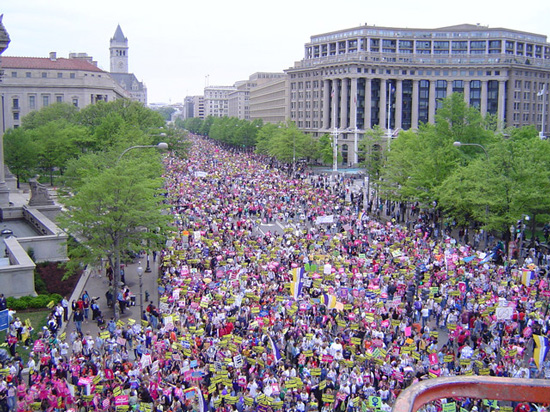


That's the first time I've heard this theory.
Would that have worked though? I don't know much about nuclear deterrence, but I'd imagine if the USSR already managed to evade the defenses and other obstacles and destroy the city center in a nuclear strike, it wouldn't be a lot of additional effort to send multiple rockets instead of only one and also target the suburbs.
Not to mention that fallout, breakdown of infrastructure, disease and hunger that followed a strike would affect the entire city in any case.