Sometimes they arrive after much adventure. Sometimes arriving is a discovery. Sometimes it's not an end but the beginning of something. Sometimes it's a departure. They all look forward, taking us with them, into whatever awaits.
As much as I love Spirited Away and Castle in the Sky, I've been so bummed Miyazaki hasn't returned to more adult storylines.
Princess Mononoke and Nausicaa are two of my top ten films. I'd do anything to have Miyazaki make one more.
I even bought Miramax's old marketing website and kept it online [1].
I was lucky enough to teach English in Hokkaido [2], which is where Ghibli animators drew inspiration for Princess Mononoke. It's such a beautiful place, and you can feel it in the film.
The Wind Rises is my favorite Ghibli, something about it just draws me in like no other. Don't get me wrong, I love Howl's Moving Castle, Princess Mononoke and Spirited Away like the next person, but The Wind Rises is special to me.
I hope someone gets this into the Internet Archive as a tidy ZIP so we don’t have to scrape them… I’ve just pushed https://github.com/rcarmo/python-fastapi-trmnl-server and these images are going to look great as part of the rotation.
If looking for "adventure" go with Laputa, Cagliostro, maybe Porco Rosso.
If looking for something "warm" go with Totoro, Kiki, Ponyo.
If looking for something more "fantastical" (probably also more complex) try Howl's, Spirited Away, Nausicaä, Mononoke.
If you are willing to consider a TV show, then Sherlock Hound is really fun and delightful in every possible way. The complete series is IIRC 26 episodes.
Also, there are some non-Miyazaki but still Ghibli films which you may want to consider too. Personally, I absolutely love Mimi wo Sumaseba and I can hear the sea, but these may well be a bit uninteresting for a 10 year old; better for a teen probably over 15 I'd guess. Pompoko is clearly recommended for your age bracket though, and it's fun too.
Finally, there's the question of Grave of the Fireflies. I think 15 is probably fine, 10... maybe. But in any case, be warned that it's a very sad story and I have very rarely met someone who could watch it without crying profusely.
What an fantastic problem to have! A few Ghibli films are a tad too odd or serious in tone for a movie night, but I can heartily recommend Ponyo, M.N. Totoro, and Spirited Away, the first being probably the most light-hearted and simple fun.
The order as presented in letterboxd is pretty spot on. The first 8 are the most accessible to audiences. After that it is more for a deep dive and/or completionists. I've seen the top 11, I should probably watch them all again sometime.
Spirited Away is my absolute favorite one and I think great for children too. Mononoke, Porco Rosso, and Nausicaa are maybe more serious/mature but still incredible. Other valid options especially for children: Totoro, Ponyo, Howl's Moving Castle.
I tend to agree with ProZD's tier list[1] where "Kiki's Delivery Service", "Porco Rosso", and "Totoro" are at S rank. Those might also be a good introduction since they're pretty "normal".
I swap back and forth between favorit movies. Every few days it may be Goodfellas. Some days it is The Room. But I always return to Kiki’s delivery service and Howls moving castle. Both are absolutely gorgeous and incredibly well told.
I also find myself quoting porco rosso a lot lately.
This a treasure trove of gorgeous lockscreen images. Very excited to put them into rotation.
Well I just scraped the hell out of that. Some very pretty images. I know it is labor intensive, but they really put the effort into a massive amount of hand drawn frames for some of these movies and it shows in the final product.
I just did Advent of Code in Python, which isn't my daily use language but was fun to play with. Threw together a script in a little less than 5 min that did what I wanted: downloaded all the screenshots and put into a directory for each movie.
I don't know what he did, but I gave gemini-cli the url and asked for a script. The LLMs are pretty good at this sort of simple but tedious implementation.
True if you think the images have no value, nor the time I saved by "outsourcing" the work, but writing the kind of trivial web scraper I've written N times before somehow does.
AI has the effect of making whatever it creates feel worthless. Something AI made says “this wasn’t worth spending any time on. It’s not something important ” Seeing something you care about become part of that Sucks.
I see value (or lack of it) in what I have in front of me, not in how much a person had to struggle and suffer for it to come into existence.
Either something is good or it’s not. Creating something good can sometimes take a lot of effort, but it’s not the effort that makes it good. Otherwise digging a hole and filling it back up would be a valuable undertaking.
What you are saying is that you either do not understand or do not care for craft (it’s an observation, not a criticism), but craft has definite value beyond the end result. Effort does play a huge part, including in animation.
The lights in windows on the background of Akira, for example, were painstakingly painted one by one. That takes skill. That is impressive. It’s the kind of work that makes one with an appreciation for art (which goes beyond “pretty picture”) take another look and imagine what the artist was feeling and thinking as they were working. It makes you wonder about exact techniques and how to improve them, how to create something new.
All of that enhances the appreciation for the movie. The craft, the skill, the sweat put into it to make a hard and grandiose vision plays into how good and influential it has become.
Had those buildings just been spit out by gen AI along with everything else, there would be no value to taking a second look. You’d probably be looking at distorted images anyway, and even if you weren’t it’d just be a bunch of pixels with no intentionality to it. If no one put effort into the details, there’s no reason to look at them. The converse is also true.
I do care for craft, but I don’t view it as an end in itself. The value of craft lies in what it creates, and that value reflects back on the undertaking itself.
But if a machine can replicate mechanically what takes a human effort and ingenuity to do, a human doing the same thing through effort and ingenuity doesn’t magically add further value. And this is understood quite universally; that’s why no human practices the craft of multiplying large numbers anymore.
The part of craft that can be replicated mechanically is the least interesting and valuable part of art.
This is what AI art supporters fail to understand because few if any of them actually practice the craft they emulate. They tend to only work with code and algorithms for which there is no fundamental human expression involved. They assume that because apart from rote intellect and memory the human experience is meaningless in regards to coding as they are acting merely a means of inputting instructions into a machine, that the human experience is equally meaningless for all creative endeavors.
However the value lies not in the technical aspects of craft as an end (which, mind you, no AI is actually good at yet) but as a means of expressing the human experience of an artist and their relationship to the viewer. That dialogue isn't something an LLM can replicate because by definition humanity isn't something an LLM can experience. And even if perfectly mastered on a technical level, it wouldn't have the same value as human expression just as a skillful forgery doesn't have the same value as an original.
> The part of craft that can be replicated mechanically is the least interesting and valuable part of art.
Everything humans do can be replicated mechanically. We’re biological machines, and crafts are just behaviors, not some mystical feat that somehow defies replication or analysis. And there can be no reasonable doubt that machines will replicate (and indeed surpass) everything human very soon.
This doesn't actually refute my comment, even given the assumption that your predictions prove correct. Even given a purely physicalist universe and a machine perfectly capable of replicating all human endeavors, most humans will find more value in human expression.
That doesn't require any argument from mysticism, just an understanding that the context of humanity has value for most humans (perhaps not you, but most humans) beyond the pure transactional mechanisms of value creation, stimulus and response.
imo a massive problem with generative AI is in communication skills of its creators.
Look at Google Gemini and how it's accepted. The only two differences between it and the rest is that it's made by Google, and they don't brag about disrupting the society or damaging its workings(Google do disrupt the society and damage its workings).
It's one thing to design a shotgun, it's another to give it a commercial name "Street Sweeper". The latter is asking to be treated unfairly. Torrenting bunch of media contents and brandishing the runnable blobs as weapons that kill all $classes_of_good_people just isn't and never was the way you communicate anything to anyone.
Okay. Let's say we find out tomorrow that Spirited Away was animated via generative AI. Unbeknownst to everyone, Ghibli has a top-secret AI division which—thanks to some key lucky breakthroughs—is many decades ahead of everyone else and has been for a long time. The animators are a front to hide the truth; Miyazaki's anti-AI declarations were pure jealousy.
You miss something critical here. For that to happen that GenAI would have had to be trained on another "Ghibli".
So your question isn't whether Ghibli had an AI, but whether Ghibli had a whole time traveling machine with it.
Your question feels like asking whether Einstein, Plato, etc. were secretly time travelers and copied someone else's style.
Something that is a general problem with all GenAI is that they copy and imitate. And just like with code being messy and dumb you'll find that Stable Diffusion in pieces of art does stupid and dumb stuff. Things it wasn't trained on. You can most prominently see that in big detailed fantasy (as in not just a photo) pictures, and looking at details. While the overall thing "looks cool" you don't get the details that artists do and you notice a lot of silly, dumb and what for a human author would be a "strange thing to invest time in and still do so badly" kind of situation.
I'd argue if we had AI in the sense that it had actually understood things and it could actually show creativity, etc. the story might be different, but as of today it is unknown whether that's possible. It would make sense, just like alien life would make a lot of sense. But for both actually thinking systems and alien life we have no clue how close we are to seeing one.
Every time someone takes an unbiased look at it (and there are many papers) it is shown that there is no understanding of anything, which to be fair is far from surprising given what the "training" (which is just a term that is an allegory and something that is kinda simulated, but also not really).
There might very well be hard and pretty obvious limitations, such as to feel and express like a human you need to be a human or provide away to simulate that and if you look at biology, anatomy, medicine, etc. you'll soon realize that even if we had technical means to do so we simply don't know most things yet, otherwise we could likely make Alzheimer, artificial brains, etc.
The topic then might be aside from all the ethical parts (when does something have human rights), whether a superhuman as all the futurists believe there will be even be able to create something of value to a regular human or are the experiences just too different. It can already be hard to get anything out of art you cannot relate to other than general analytical interest. However on that side of things Spirited Away already might be on the "little value" side.
This isn't to defend human creation per se, but to counter often completely off understanding of what GenAI is and does.
One final comparison: We already have huge amounts of people capable of reproducing Gibli and other art. Their work might be devalued (even though I'd assume some art their own stuff into their work).
People don't buy a Picasso, because they can't find a copy or a print that even has added benefits such as requiring as much care, being cheaper. Einstein isn't unimportant today, because you learn about his work in school or on Wikipedia.
But your question is like asking whether Einstein's work would be without value, if he secretly had Wikipedia.
> You miss something critical here. For that to happen that GenAI would have had to be trained on another "Ghibli".
Eh, maybe it got trained on Nausicaä, and then a lot of prompting and manual touch up work was used to adapt the style to what we now know as Spirited Away. Or maybe that animation department wasn't completely for show and they did draw some reference frames, but the AI figured out everything in between.
I don't really want to get into a discussion about the theoretical limits of AI, because I don't know what they are and I don't think anyone does. But if "the process is important for art," what happens if the creator lies about the process? If you initially experience the art without knowing about the lie, does learning the truth retroactively erase your previous experience? How does that make sense?
It has always seemed more logical to me that the final piece ought to be all that matters when evaluating art, and any details you know about the creator or process should be ignored to the greatest extent possible. That's difficult to do in many cases, but it can be a goal. I'm also aware that lots of people disagree with me on this.
Spirited Away is an intricate expression of Miyazaki's ethics as formed by his unique lived experience and nostalgia for classical Japanese culture, as well as a criticism of Western capitalist excess filtered through Shinto philosophy.
There is literally no universe in which a generative AI creates a work of art of that magnitude. You can get "make this meme is the style of Ghibli" from an AI and it can imitate the most facile properties of the style but that still requires the style to imitate. AI is never going to generate the genius of Hayao Miyazaki from first principles, that isn't even possible.
the process is not important for art, although it might have value for people. art is a subjective experience, one that comes to life in the obeserver.
No, it doesn’t have to take effort, but that does mean that someone genuinely cares.
Like, I love blog posts. Really do, I’ll read anyone’s about anything. Someone thought of something and cared about it and put it into the world and that’s wonderful.
But someone making an AI post doesn’t care. And worse, it makes anyone who does care feel silly, like, why am I wasting my time on this thing that’s so worthless that whatever the first thing the computer spits out is good enough for them
AI output often 'looks like something' on first try, which makes it easy to assume no effort went in.
But there's a big difference between prompting and accepting the first output versus someone using search, multiple LLMs, actually READING the underlying papers, and iterating until it's done.
Sometimes that still means getting to 'done' faster than by more traditional means. Sometimes it means more depth than you'd manage otherwise. Sometimes somewhere in between.
Of course, by that point, either way, it doesn't really look like lazy AI output anymore.
Maybe it's not so much about the tools/agents as it is about the intent-to-engage behind them?
Studio Ghibli doesn’t want the style “amplified”. That brings them no benefit, it’s only detrimental, and they’ve made that abundantly clear.
They are one of the best, most popular and influential animation studios ever. That you had never heard of them suggests you have little to no interest in animation, which is perfectly fine but also means you’re not their target audience.
Can someone explain why the Ghibli films are so popular?
I’ve been on a Ghibli binge this week because my wife can’t believe that I’ve never watched any of their films so we’ve watched 1 a day. I wasn’t intentionally avoiding them, they just didn’t seem interesting based on the few clips I’ve seen. Having watched a few, my opinion is unchanged. I enjoyed them, I just don’t ‘get’ the craze.
While the films are generally beautifully animated, I simply couldn’t get into the stories nor understand why they’re so highly acclaimed. I say this as an anime fan and a fairly typical otaku.
The stories don’t really have a proper conclusion, it’s often a pattern of a thing happened, let’s undo the thing, life goes on.
The Japanese voice acting is often quite bad as Miyazaki seems to have a very thing against using professional voice actors.
If you're an Otaku it's not too surprising you don't like Ghibli. Ghibli is quite atypical and the reason it got popular is because it's not like the standard anime, that people used to look down on, in the 80s and forward until maybe 2015 when it got normalized.
>The stories don’t really have a proper conclusion, it’s often a pattern of a thing happened, let’s undo the thing, life goes on.
One could say this about Ghost in the Shell, Akira, and even Evangelion too.
I personally think that Ghibli is popular because it gives a sense of nostalgia, a beautiful depiction of nature and it feels alive because the care that goes in to the background and background characters movement.
It feel less like a theater, a story crafted to entertain, and more just like a snapshot of life of someone/something that will go on after the movie ends.
Also as for music. If you watched the American version, they've actually changed many scenes and added additional music. Disney said that American populace couldn't watch a scene where no music is present for happens for more than 3 min so they had to add some extra music. [1]
> If you're an Otaku it's not too surprising you don't like Ghibli.
That’s definitely something I felt the whole time. They’re anime for non-anime fans.
Story-wise, Gits and Akira do have a kind of logical story progression. I don’t understand Eva too. Cool visuals though.
Let’s take Princess Mononoke as an example. The Main Character goes west in search for something, discovers a Japanese Industrial Revolution underway led by some lady Eboshi. Eboshi and tall shoes guy kill a god, causing massive death and destruction, but they returned the god’s head at the end and suddenly everything is forgiven. Mononoke’s adopted mom is dead, several tribes of boars are dead, thousands of people are dead, the industrious village is destroyed and large numbers of their inhabitants sent to die in an ambush by their own boss but it’s all OK, because the people that started it ended it by returning something they stole. What?
As for Princess mononoke it's a bit hard to write down everything. It's Miyazakis magnus opus. (not spirited away. That was explicitly to woo western audience with oriental mysticism)
It's a story of conflict and mistakes. Do you watch a history movie about WW1 and also get perplexed "and then they did WW2, What?". As said, it's not a story about linear start-end like theater. It's a snapshot of a historical event.
And the idea is not industrial revolution. The idea is that tatara village is a sanctuary for the outcast. The place is for prostitutes and slaves that fled. Eboshi, is presented as this opportunistic woman but also simultaneously presented as a savior that even accommodate lepers. During the story, the village is also attacked by Samurais; the outer world "lords" that shunned the outcasts, and now that they're successful, come to ask for tithe. Something the village shuns by shooting at the emissary. This leads to war. The Eboshi is desperate and contact the Buddhist monk and get a formar letter from the emperor to hunt for the god, to gain legitimacy and protection.
The nature, Shishigami, doesn't care. They explicitly say that in the end. It's the process of nature and doesn't choose sides. and really, for everyone to move on, in a harsh world, is to be "OK" with what happened. This is more realistic than some story of tragedy or revenge that have an "end of history" synonymous as "the end of the story". Life goes on.
Miyazaki have been anti industrial, pro nature all his life. But, he also admits that industry is helping humans. The tatara village is just that. They are "evil" from mononoke and forest spirits point of view, but they're the down trodden, desperate that finally built a place for them.
The point of the movie is that Ashitaka, the outsider, that comes from a dying tribe in Japan peninsula, realize that his deadly curse is not caused by monochrome "evil, selfish people" or "revengeful nature". But that everyone (except the samurai and monks) have their reasons for the actions, and that lead to conflict. That in the end, would lead to destruction and the only way to live is to coexist.
The story of coexistence START at the end of the movie. Which is ofc underwhelming to watcher if you want a definitive answer of "will it work? Is this happy ever after? Who won? Whose story is this". The anser is "we don't know, we don't know, and the story is the event that transpired".
Most ghibli stories (that are actually written by Miyazaki) follow similar patterns. History continues
Miyazaki's films are often more similar to the traditional four-part Kishōtenketsu[0] story structure rather than the more common three-act or Hero's Journey style. If you're not used to that structure you can find it boring or difficult to immerse yourself in. I love a lot of Miyazaki films and I think My Neighbour Totoro[1] is one of the finest movies ever created, but I can't just throw them on like I can most movies; if I'm not in the right mood for them I'll just get bored.
For a practical advice, I'd suggest watching either The Wind Rises (if you want strictly Miyazaki) or Only Yesterday (if any Ghibli is fine) next. Neither will have the strict conclusion that you are looking for, but they both are more "adult" films that are similar to Western dramas so you might find your brain is more accepting of that. At the very least you might find them more relatable than his other films and their child protagonists; I think The Wind Rises should speak well to any tech worker these days.
For less useful advice: it wasn't until I had an apartment high enough that I could see the skyline over the trees did I begin to understand why artists painted clouds the colors they did[2]. All art is holding a mirror up to nature, sometimes you gotta touch grass before you can get it.
[1] Castle in the Sky and Porco Rosso are my favourite Ghibli films, but Totoro I think is the greatest children's movie of all time and one of the few films capable of reminding someone what being a child is really like. I never got into Spirited Away or Howls Moving Castle though.
I believe this is primarily due to the distinct humanistic perspective found in Studio Ghibli animations. For the average anime enthusiast, entertainment value often takes precedence over other factors; however, Ghibli works are regarded as possessing greater intellectual depth and literary quality. Their themes often revolve around childhood innocence, societal shifts, environmental protection, and are replete with metaphors for the real world. This offers ample room for interpretation, allowing the films to resonate with a diverse audience—whether through their imaginative visual storytelling or their unique spiritual essence.
Few images I have looked at include the characters as well. When I watched "When Marine Was There" I loved the background stills and wanted to use them as wallpaper or something. The house with the lake looked otherworldly to me.
I don't know how to navigate this website and if it even contains the backgrounds only. Does it have those, are Ghibli movie backgrounds available anywhere else?
I would have never heard of Studio Ghibli along with several others if it wasn't in the training data. The result? More awareness and relevance, more visit to their museums, more viewing streams, and more snarky discussion comments surrounding morality.
> Or maybe the next great story teller to create something meaningful that touches people in ways that change their mental model of the world.
How many pieces of AI art can you actually remember? I mean, call to mind in the same detail as you can remember a photograph?
I think AI generated imagery is fundamentally compromised somehow in this regard: something subliminally uncanny, no matter how realistic, makes them harder to recall.
For this reason I personally doubt AI generated art will ever have a profound effect on people. Because it really seems to lack the mechanism.
Well it is that but I think it is also that it is, at some informational level, fundamentally incoherent and unreal. It looks fine, but it is not anything. It has no intent in the art strokes (which I think always shows in geometry), it has no reality in the lighting of a photo.
It may be, I concede, that I see more AI-generated photos than other art types (AI generated photo fraud is a serious issue in a corner of the web I frequent) but I tend to find that I literally can't remember what they look like long after I see them.
Same exercise, focussing on faces specifically:
- try to visualise Taylor Swift's face. Or that of Rachel Weisz or Ming-Na Wen, or Sarah Silverman, or Alfre Woodard.
- now try to visualise the face of Tilly Norwood.
Obviously if you don't know who any of these people are, you can't do this exercise (which is why I included Taylor Swift). And if you don't know what Tilly Norwood is, you can't do this exercise.
But if you've seen a lot of content about Tilly Norwood, can you visualise the face in the same way? Is it memorable? It is not.
It is my contention that these images actually have something very undefinable missing, that my brain needs to find them worth memorising. I have seen many "AI models" now and I can't remember any of "their" faces.
Every frame of everything Miyazaki has ever done and every other movie, tv show, anime, screenplay, book and work of art by every artist everywhere have already been assimilated. Ghibli slop memes are already old hat.
I'm not claiming it's a good thing by any means but there's no point in worrying about it, the paperclip maximizer has done its work.


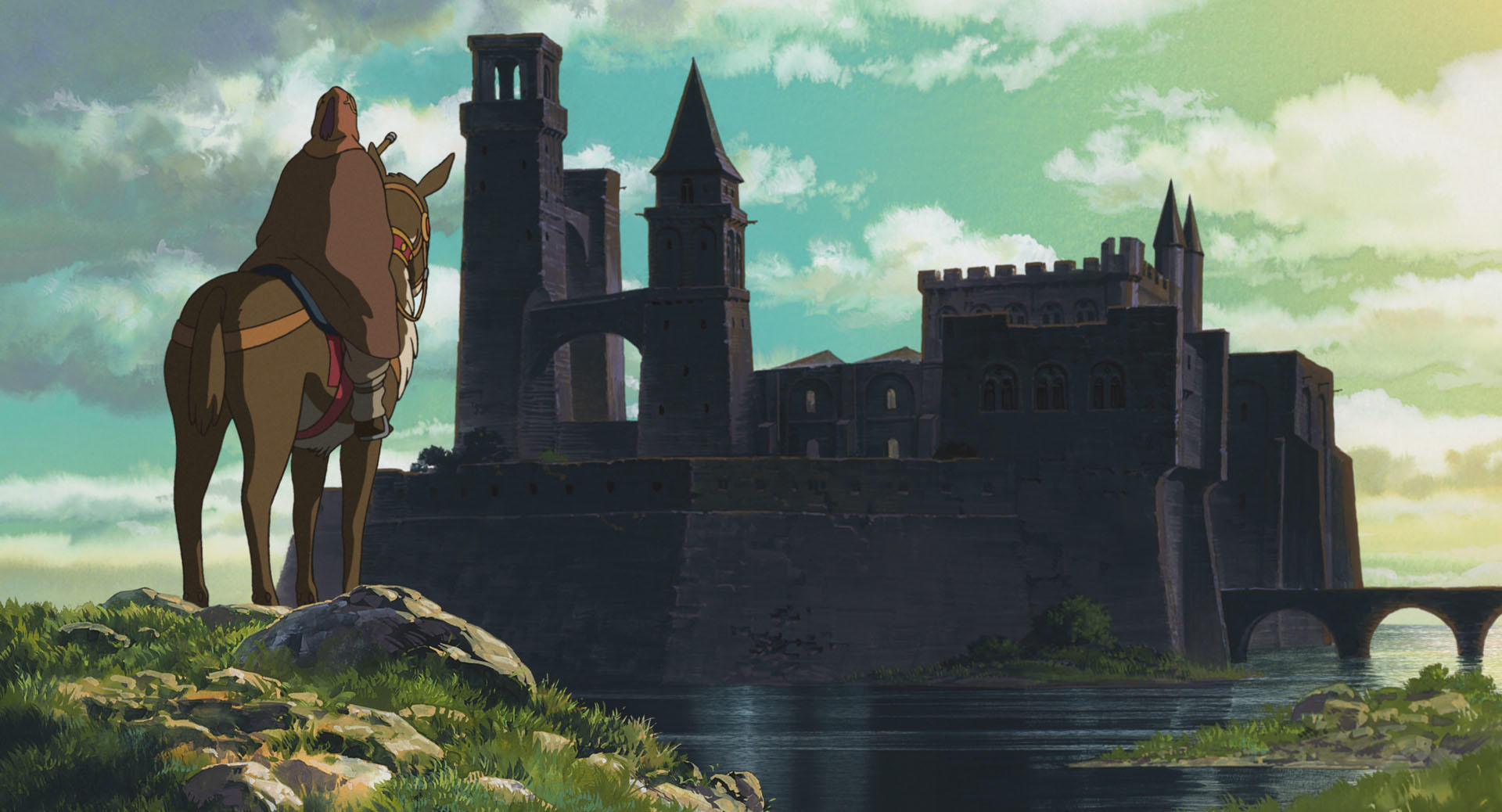

https://www.ghibli.jp/gallery/marnie004.jpg
https://www.ghibli.jp/gallery/ponyo005.jpg
https://www.ghibli.jp/gallery/ged023.jpg
https://www.ghibli.jp/gallery/majo002.jpg
https://www.ghibli.jp/gallery/totoro001.jpg
https://www.ghibli.jp/gallery/laputa037.jpg
https://www.ghibli.jp/gallery/umi003.jpg
Sometimes they arrive after much adventure. Sometimes arriving is a discovery. Sometimes it's not an end but the beginning of something. Sometimes it's a departure. They all look forward, taking us with them, into whatever awaits.
reply