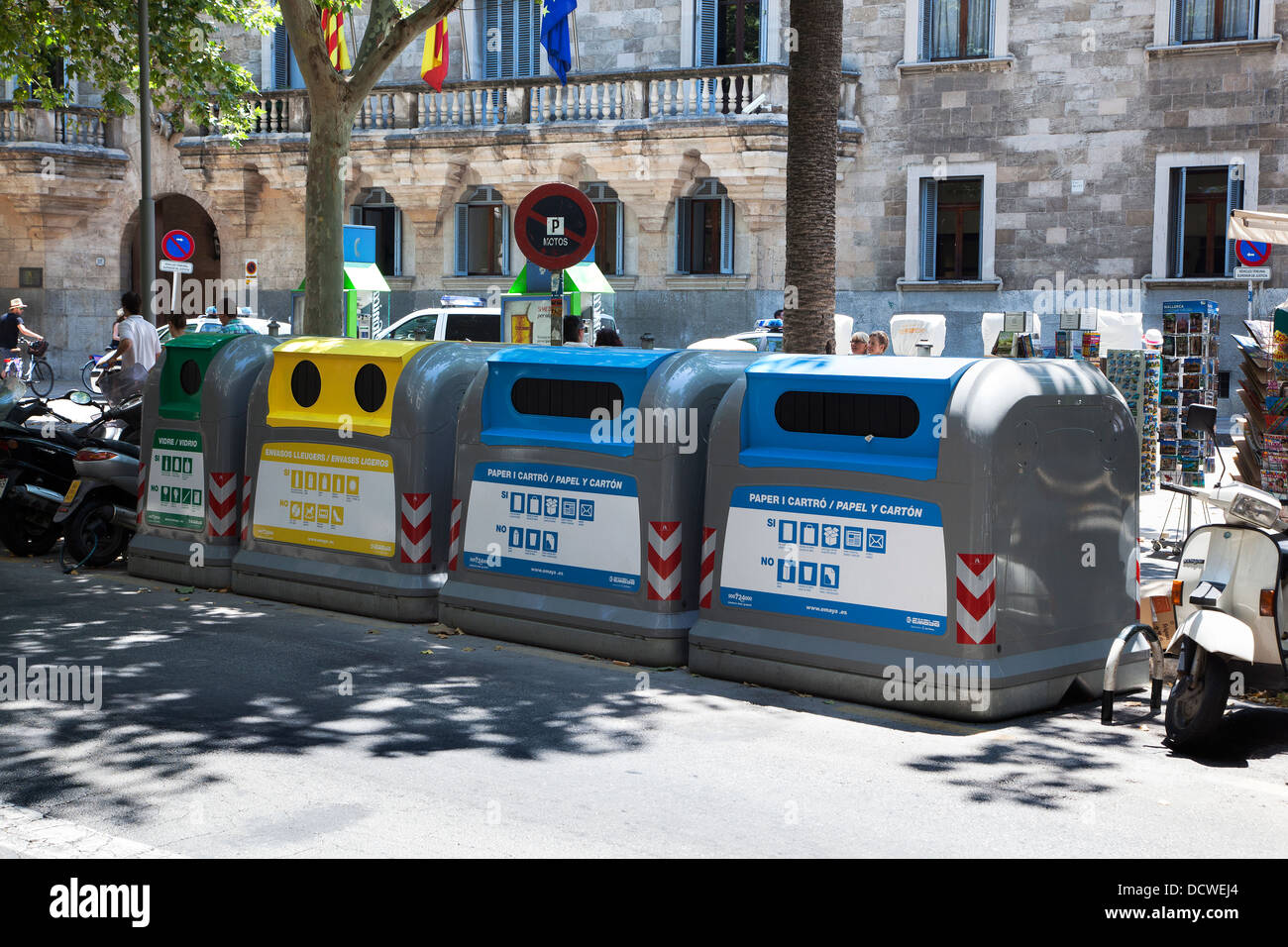
This honestly appears to be a very difficult problem to solve.
It seems that to be truly be effective in rat reduction at a city scale the fix may need to come from elsewhere and may have very little to do with directly working on exterminating the rats.
Fixes may be needed starting from urban planning through waste/sewage handling methods at a street level all the way up to the city.
Also not sure if there would be enough leverage and incentives for any candidate who is going to be hired for this job at their advertised $120K to be able to achieve that kind of a change!
Seems like another easy win for the rats at the tax payers expense!
Oh let me tell you the story of Worcester, MA. Now Worcester (pronounced woostah) is much smaller than NYC but still nothing tiny. It has city trash pickup but instead of taxing its citizens for this service it came up with the ingenious plan to charge people for usage. If you want to throw out some trash what you do is you go to a nearby convenience or liquor store and buy these tiny flimsy yellow bags for a fairly steep price (when I lived there it was nearly $2/bag), and then you just put your garbage in the bags and put it on the curb and it’ll get picked up. This way those who generate more garbage pay more and people would be encouraged to generate less garbage. Genius, right?
No, wrong. So wrong. As I’m sure you can already see, it’s far easier to just leave your trash on the street than to take a trip to the city-ordained liquor stores to buy the approved bags. And with the bags being tiny and flimsy you don’t have much of an option for anything larger to get tossed. Got a big pillow? A dirty paint bucket? A 2x4? Just leave that anywhere. It was honestly one of the dirtiest places I’ve ever lived.
Interesting, that’s basically the model a lot of Japanese towns use.
The difference is, if you leave garbage without the right bag/on the street your neighbours are going to dump it back on your front door.
Larger item dumping is still a problem though. Some places issues coupons for a certain number of trips to the dump/year for local residents that can help.
Taiwan does this too and as the German poster mentioned, this results in MASSIVE out-of-city illegal dumpsites. It also leads to a cultural quirk where every day at some set time your whole neighborhood stands partly on a corner, partly spilling to a road, waiting for the trash truck to come. Then when it arrives everyone lines up and sets their daily trash bag into the truck.
It's an important part of local culture cause all the old people like hanging out and hyucking it up together but I've got a TODO item to map public vehicle / pedestrian collision data against local trash pickup times to see how often scooters or cars are taking out the elderly that are walking into a second lane of traffic because the sidewalk is packed with people holding trash bags and the first lane is taken up by a trash truck. Bonus points if the second lane also had a slow moving trash motorcycle (some kind of separate private trash pickup entity I don't yet understand) that decided to simply park adjacent to the trash truck and directly in traffic.
Anyway plus side yeah in Taipei there isn't a rat problem like new york, so I guess in some ways it kinda works, definitely not ideal imo though. I don't think trash bins would work either here though, the alleys are too small, the road system too... improvised.
A massive out-of-city dumpster is only possible if the authorities are looking the other way, and this is valid for Taiwan, Germany or Romania just the same. Yes individuals are dumping the garbage but it's the society as a whole accepting it, maybe with minor moaning.
I think you're minimizing here the realities of policing, policy, law, law enforcement, and societal engagement and enforcement of cultural values.
There is no country on earth with no crime. All countries on earth thus have authorities looking the other way on crime. All societies on earth are accepting of crime.
See the absurdity? Thus I think your post is over generalizing.
EDIT: I'm realizing that you might be a person who would make arguments about "personal responsibility" that consider nothing about environment and instead place wholesale blanket judgements on people for situations they find themselves in. Stop me if I'm extrapolating too far and being unfair, but when seeing any overweight person, would you think to yourself, "that person is accepting of their weight" ?
When there is a big illegal dumbster, it would be trivial to stop it from growing.
One police patrol car(or a camera) and one serious fine would stop it. And it did indeed stop most of it. It used to be common, but is not anymore here in germany, because people like me really get upset about that shit and so there is that anger energy that makes the institutions act.
If no one cares, than the dumbsters would just grow again.
How do you explain that in other countries this works? Garbage is dumped by humans, it's not a natural catastrophe. All those policies and cultural values you are mentioning converge to the fact that outside Taipei there are huge dumpsters, while in other countries there are not. Why there are in Taipei, it's not for me to judge, you probably know much better the situation. But the reality is, again, in other countries these dumpsters are not there. You can accept the fact, like the culture you mention seems to do, or try to move something in your (perceived) right direction. Either way, I'm definitely not the cause why there are dumpsters outside Taipei.
Yes a lot of places (particularly in Europe) do this as well. What you do is have outrageous fines for dumping and actually enforce it and voila - no garbage.
I suspect it has more to do with a sense of ownership and community than any fines. US Americans tend to live in their homes, while in many other places people live in their city.
It's a natural consequence of American individualism.
Rotterdam, the Netherlands: if you leave a trash bag on the street, inspectors will go through the trash to find identifiable information. The fine is 300+ EUR.
The system pays for itself.
Edit: I looked it up, they've changed it to a three-strike system. 125/250 for the first two; your choice of 500 or 3 days community service (cleaning up litter) on the third strike.
Where do people keep getting these absurd ideas about "american Individualism" being the root fault of so many problems? No, dirty cities are not caused by American individualism. They're caused by a mix of factors that can vary enormously from one place to another and are present all over the world, not just in the U.S.
Have you even traveled much across this huge and deeply diverse country? Or do you just stereotype and generalize by pulling assumptions out of thin air?
There are also many, many very clean communities in the United States, and many people or groups of people who despite loving their personal freedoms and individualism, also take community spirit very seriously in many ways. The country has been famous for this for centuries.
Goddam how simplistic some of the U.S bashing on this site can be, much of it based on incredible levels of ignorance and caricaturesque notions from people who don't even live in the country. Many of them Europeans too, who should know a bit better about avoiding stupid stereotypes and simplistic depictions of complex cultures.
The U.S also consistently happens to rank as one of the world's most charitable countries on a per capita basis (not just in total dollar value donated, though in this too it ranks in the top spot). This ranking has been noted by many sources across many years. American individualism being a terrible thing again... (Yes, sarcasm)
This statistic is highly influenced by income tier, donations to religious organisations like churches, the tax code and as a form of a social safety net that might otherwise be missing.
And none of that changes the basic fact that they tend to donate a lot of money, goods and time to charity-related projects. It's almost like saying "yes sure they donate, but it doesn't count because of this random list of reasons that I don't like".
Also, another major myth of the U.S is that social safety nets don't exist. They're not as well woven as they are in many developed countries, but they're very present and heavily funded. In fact, the single largest annual U.S federal budgetary outlay, costing trillions per year is the whole range of social support programs managed by its government (see link below).
What's more, keep in mind that managing such a thing is much harder in a country of 320 million people than it is in your average European state, of which none have a population of over 90 million (Russia excluded). The U.S social safety net could be much better, especially if spending on other things were discounted, but it's not absent or even close to it.
Also, I partly exclude military spending, because though this viewpoint won't be popular at all here, the colossal U.S defense budget works as a sort of (very flawed) global safety net for many other countries in their relations with certain neighbors.
> Have you even traveled much across this huge and deeply diverse country?
Is this post a travel ad?
Do we pretend cities are overwhelmingly clean just because places like Dallas also exist? Are people supposed to first take selfies in NY and Philly, in Chicago, SF, LA, and Phoenix, to be permitted to say they're dirty?
Maybe on average it's not so bad, but "this place is diverse therefore the opposite is true" is worse than anecdata.
> Goddam how simplistic some of the U.S bashing on this site can be,
Nobody is bashing the states. And nobody said American individualism is all bad.
> Or do you just stereotype and generalize by pulling assumptions out of thin air?
Is individualism -> not my problem really a bad explanation? Even when people to try to explain why their hometown in the US is clean it usually starts with "no walled enclaves here/people don't live in little castles".
I think you might taking issue with the assumption that American cities are dirty in the first place, not my attempt at explaining it? It's hard to tell since most of your post is you being upset with me, making accusations, very little substance.
For European city dwellers, "where you live" and a sense of "ownership" extends far beyond the walls of your apartment/home - to incorporate your neighborhood to some extent.
For a lot of US folks in cities, this doesn't seem to be the case.
The post is wrong though. Tokyo isn't a nice city because Japanese people are mystically polite to each other, it's nice because it has good policies which you can copy yourself.
It is because of the culture of the Japanese people. In the World Cup and other stadiums they pick up all their trash when they leave and leave it pristine. They don’t have to worry about fines in the stadium.
They are rather polite, but they also have good residential trash pickup.
In this case, anyway. It's actually pretty difficult to get rid of some things, so people can build up a lot of junk at home - Marie Kondo's books in Japan actually have extra sections on how to get rid of it.
Maybe. It's equally possible that any particular policy won't stand by itself. That for the garbage policy to work you also need some large number of other policies that are endogenous to Japan.
I suspect it also has to do with the possibility that someone in the US who is antisocial enough to dump their trash in the street might also be armed and not afraid to chase you at gunpoint if you try to toss their trash back on their front porch... if you're lucky, that is; decent chance they'll just shoot you.
Made me think of this, a story about neighbors killing each other over perceived trash dumping offenses. America is big enough you can't say it won't happen
> Again, this is just another excuse, and part of the problem. The more Americans view interaction through this lens, the worse they are for it.
Literally people have died thanks to these laws because of trigger-happy arseholes thinking they're backed by these laws, even if there have been verdicts to the contrary like [1].
The problem is: there are way too many guns in circulation in the US, there are way too many vaguely written (or titled) laws that seem to allow this kind of use, and it sends shockwaves through the country regularly. Hell, it even has an impact on policing because police legitimately have to fear getting shot over as benign interactions as traffic stops [2][3], with the result of outright homicides by cops in return [4].
I'm European and hell no I won't ever visit the US until y'all have your gun problems resolved (and your border control under control instead of employing rapists and other goons with a license to search your electronic devices, but that's another topic).
My former roomie had this lovely letter pinned on his wall, from the DA, or "Staatsanwaltschaft" as the locals say.
It states that witnesses reported him putting the box of his new LG tv, in with the paper rubbish.
It then states that a subsequent investigation proved, that it was indeed his LG cardboard box, with, o horror, the styrofoam packaging still inside! Don't laugh, it's a crime.
It concludes by politely offering a close to a 1000 CHF fine, lest he'd like to discuss the matter in front of a judge.
Total aside, just FYI it's 'on par with'; in this usage 'par' comes directly from Latin without passing French, where 'par' is not about equality. I think the French equivalent would be 'égal à'.
Interesting! I believe my English teacher in middle school always wrote it like this - but it's equally possible that I just memorized it wrong. I'll make sure to use it correctly from now on.
They learn to recycle in the proper places. Styrofoam, cooking oils, metals, glass by color (although all in the same recycling place), paper and carton gets picked from the curb in certain (different) days... they receive the yearly schedule and all necessary addresses in the post and follow it.
My point is that everyone makes mistakes at some point, no matter the "learning". Everyone. Punishing someone poor so disproportionately seems really harsh and unfair.
But, as someone else pointed out bellow, supposedly the judge also looks at the person's income, and, hopefully, the fine is commensurate with said person's income (i.e. not really reaching 1000 CHF).
So you wanted to move to switzerland, but not anymore because you refuse to learn recycling?
It is really not that hard.
And the fine is high, but if you don't enforce rules, the rules become meaningless and then for example the recycled paper worthless, because there is too much plastic in them.
Edit: but to be clear, I would not call the police on someone who did not do proper recycling. I would simply tell them directly.
> What happens to the people who barely scrap by but who receive this type of fines?
You never do it again, that's for sure. Switzerland is a very fine-heavy society. Sounds like a bit more research before developing that wish would have been beneficial for you... good for you that you didn't follow that wish.
> Sounds like a bit more research before developing that wish would have been beneficial for you
Yeah, I realise I dodged a bullet.
We did visit Switzerland and one of the main no-no-s for me was when I saw that the authorities can enter your house to check on you almost at will, if you live in Government-subsidised housing, that is. I did grow up in a Communist dictatorship, where all the housing was basically subsidised, and we didn't have to put up with crazy intruding stuff like that. But it is a very clean country, I'll give the Swiss that.
>What happens to the people who barely scrap by but who receive this type of fines?
Really it isn't that big of a problem. A judge would likely look at your income but if you want to compare there are better/worse things to look at, like healthcare might be one. It is after all avoidable by just recycling unlike needing healthcare.
I don’t know about other places but from what I observed and experienced in Worcester there were several problems that made it not work:
1. The cost of the trash bags relative to median income in some neighborhoods was too high. When a 5 pack of bags is $9 and you earn $7.25/hour before taxes, it is suddenly not that easy to justify doing the right thing when the free thing is possible.
2. People lived in apartment buildings and multi family homes so there is no easy identification of who exactly leaves a car battery or a mattress on the sidewalk at 3am. Having cops watch all the streets all the time for this wouldn’t work and neighbors don’t want to bother watching each other.
3. Because people didn’t earn that much relative to cost of living, high fines would just throw poor people in jail while those who can afford the bags can just buy the bags. So you’d still have trash on the streets but also cause people who can least afford it to lose their jobs by making them miss work.
4. Minor point but where you buy the bags matters. It was highly inconvenient that you couldn’t buy them at grocery stores. Instead you had to literally go out of your way to go to sketchy convenience stores and liquor stores instead.
Plenty of people used the bags but there were enough who didn’t that it made the city dirty. And once you get used to seeing trash on the street you are a lot less likely to think twice about contributing to it yourself.
i dont live in the US, but a small city in north india. so, we had this garbage problem (like you could see in new delhi today or a few years ago) on the streets with lots and lots of street garbage just everywhere.
over the past few years some changes were made.
1. a garbage truck ACTAULLY knocks on your door every morning, rain or snow and collects your home garbage. what used to happen was people earlier would fill their dustbins and once they were full, would take it outside to the nearest electric pole and just dump it there. stray dogs, straw cows would have a feast....
Now, the municipality took measures by giving garbage bins to everyone (for some tiny amount) and the garbage truck would take the days worth. that and the garbage collectors would double as street stray pickers so during their rounds if they found any random garbage, they would collect as they went. then they would manually sweep the streets every other day.
markets and other stuff, there is an informal "rag pickers" who take away business packing and other stuff because it is consistent and they get some income so that doesn't go to the streets. the municipality then goes around at night and does a manual sweep, every single day.
NO-ONE buys trash bags here. It is JUST TOO expensive like you said.
there is one part of the problem that still remains. Our city/region is still developing so there is constant constructions going on EVERYWHERE. the construction related wastage is neglected somewhat and people go at night and dump it here and there but otherwise i can safely say our city is MUCH MUCH cleaner than it was 5 years ago.
one of the good steps was the mandatory municipality fees which is only a few hundred bucks in local currency and that has helped a lot (plus the employees of the municipality nag people about leaving trash which helped in its own way)
We have this in the UK except for the enforcement bit which is only vary rare headline seeking click-bait and the consequences are obvious. Some remote spots have large amounts of industrial-scale waste dumped on regular basis, I walk past 3 of them every week yet the local council always feigns surprise when it happens.
The answer is, as you have, severe enforcement or provision of an affordable alternative.
I would argue the answer is twofold. Make it easy to do the right thing and make it very expensive to not do the right thing. Just making it very expensive doesn't work and will feel unjust when you get fined.
Yeah, some genius thought, "lets charge money to drop things at the dump to encourage people not to buy crap that ends up in the dump, it will save the planet!"
But the reality is, the dump which has disposal standards costs money, so let's drop trash in pristine wilderness because we won't get caught.
The other problem is a landfill or dump is miles and miles away. As you said, they charge money, and they also have rules.
You might not be able to throw out bags of household trash, for example. They also usually don't take certain kinds of waste like old tires, construction debris, appliances, paint, batteries, etc.
So people just dump it wherever they find empty lots.
Or they don't have a car and the city bus isn't going to allow you to bring a mattress on it! Your options then are pay someone $100 to get rid of it (which you likely don't have if you don't have a car) or dump it somewhere and hope for the best.
It took me a decade in Ireland to realize that crime is allowed. Literally. At all tiers of society. You can stomp on your girlfriend's neck and get a suspended sentence. You can blatantly violate GDPR and the Irish DPC will look the other way. You can plop a couple mobile homes on to your land and nobody will do anything. You can break any and all environmental laws (ripping out hedgerows in nesting season? Dumping massive amounts of waste? Cutting turf from protected bogs?) and people get nechaches they can't even nod and say "sure it's grand" fast enough. Never mind car crime - there isn't a footpath or bike lane in the country that isn't littered with vehicles. When I was in Dublin 2 we'd see people clamped for running out of time on the meter when they parked legally but other, more in-the-know people, would park on the footpath THE WHOLE WEEKEND with zero consequence.
I don't know what it is. Absolute, profound, laziness? The gardai are useless. Though I remember when I registered to vote at the Garda station (I had just been naturalised) the officer told me "whatever you do don't vote for the Green Party" (explains some of the above I suppose)
I think of myself as left but I must admit I'd be really interested in a politician who wanted to actually enforce the law.
> You can stomp on your girlfriend's neck and get a suspended sentence.
Physical assaults are really poorly handled by the courts.
For violent crimes, they even allow alcohol or drugs as a mitigating factor, and rarely follow up on the character references. Amusingly, for nonviolent crimes they are much stricter.
Worse - self defense is next to impossible. You can't own pepper spray or anything like that, and if you fight back you can also end up in the dock for assault.
> You can blatantly violate GDPR and the Irish DPC will look the other way.
The DPC is (deliberately) chronically underfunded. Some suspect this is to keep the country a friendly location for certain multinational companies.
> You can plop a couple mobile homes on to your land and nobody will do anything.
That doesn't violate the letter of the (backwards) planning laws.
> You can break any and all environmental laws
Enforcement of those is left to councils, who often are the ones breaking said laws (specifically, destroying habitats).
As for turf cutting, those laws were poorly thought out and likely will play a big part in the next election in rural areas.
Banning commercial harvesting is undeniably a good thing, but the hard and fast attempt to ban cutting for personal use has not been well received, especially in the current climate with regards energy.
> The gardai are useless.
Yes, they seem to have their priorities backwards a lot of the time. They are excellent at pursuing cannabis users and road traffic offenses, but pretty rubbish at everything else.
The easy out politically is to call for more Gardai to be recruited, but numbers aren't the real problem - quality and distribution are.
> the officer told me "whatever you do don't vote for the Green Party"
The Greens here aren't well liked for many reasons around the country - largely when they come up with policies, they ignore the objective reality of life outside Dublin, and tend to go right towards taxing the bollix out of you or banning things without providing an alternative. See also: turf.
Take for example, public transport. Outside urban areas, it may as well not exist. However the Greens won't advocate for expanded public transit in rural (or even commuter areas outside Dublin) because there is "no demand" and "everyone there will just drive anyway".
They are also entirely opposed to nuclear power, which is unfortunate.
They are often referred to as "Fine Gael on bikes" for a reason.
> I'd be really interested in a politician who wanted to actually enforce the law.
This would require systemic change of the Gardai. FF, FG, and the Greens have no interest in this.
It would also require probably some changes to the courts...
I'm a green voter in Offaly, incidentally, and I ride my bike to the train (_some_ public transport exists out here!) and find a lot of people expect the greens to just give them free Teslas or something.
The officer not liking the greens on a personal level is fine. Telling someone not to vote for them, though, is appallingly unprofessional.
We chatted with the gardai because the neighbours (the ones with the multiple mobile homes who, for that matter, built their whole house without planning, but it's OK because all 17 of them will come and scream at any council worker who talks to them) left a dead crow in a bag by our house and one of them couldn't get why we might be freaked out by this.
In my city I have two 110 gallon trash bins that are picked up twice a week. Have more or something bulky? Put it next to the bin and it will get thrown in the truck.
I have the most amazing garbage collection. No litter, no dumping, the trash is picked up and taken care of.
Australia has hard rubbish collection for the big stuff - once or twice a year you dump your large items on the curb and they are removed, people salvaging from hard rubbish seems to be a popular pass time too (it’s mostly unwanted furniture / white goods in okay condition, so not as gross as it sounds)
That's what they do here in Switzerland, except you put the bags in dedicated dumpsters. The bags have different sizes up to 110 L, and for the big junk problem every couple of months you can throw away anything you can personally carry to a parked garbage truck :D
Eu country: where i am we sort our stuff. Rotate leaving it out every three weeks on a tuesday glass, paper, plastic, and every two weeks 'regular' rubbish gets put in an RFID'd large bin.
The bucketed glass, boxed paper, and plastic in a sack (one hundred each of which cost nothing ie €0.00, we just sign for them at the town hall, or - rather conveniently - a local bar) having been put out on a Monday evening are gone by 0800. These removals all cost about €180pa.
The larger bi-weekly bins are generally emptied by 1000, and we are billed by weight. As a single resident i get a hell of a discount on the total year, but i have to use the bin min 4 times a year.
I often end up borrowing rubbish from my neighbours, just to keep my numbers up.
We also have a local dump for when house cleaning, much stuff, electronics, poisons etc. That's included in the $180 and can be used whenever open, as often as you like and you can stil take plastic, glass and paper there.
All i 'miss' is a large-item collection service, that may exist - I've just never asked, as I've never needed it.
When the system was introduced, about 15 years ago, people were upset that the big dumpsters were taken away and cats etc would rip open the bags, and the rubbish in the street would be unsightly.
I really don't think anyone in the whole city would go back to the dumpster ways (though there are dumpsters strategically around - several many for where tourists are (regularly emptied smaller bins are gathered together).
Sounds like our system, maybe different numbers. We can call large item collections for free twice per year. Additional collections incur a small fee, but nothing too expensive.
But I know the feeling of being unaware of such details... Renovations and furnishing produces huge amounts of cardboard trash. Took us a half year and many car trips to the local recycling company to realize that our neighbors just put their huge cardboard boxes next to their bin on pick up day! Insert Picard facepalm
At least the recycler takes paper/cardboard for free, and is not too far away.
Dumpsters could be put and taxed, like in lots of cities around the world. Organizing trash collection is one of the first reasons to have a city council in the first place!
I understand it is difficult to raise taxes for this if they were not there in the first place. Aluminum collection, which has some value, could subsidize part of the tax. The other could come from some tax on real estate, since waste is supposedly linked to people (I know in Germany I pay for building trash collection).
With such prime real estate, it might be a problem to find the space officially (those trash bags are somewhere outside right now). Idk, maybe rats are part of Gotham city for now.
This is the exact same model plenty of Dutch cities use and this is absolutely not the problem they have. Sounds more like a city cleaning problem than anything to do with waste collection.
Wakefield council, UK, allows 2 pick ups of large items a year. Their website has a form you complete and they tell you when to leave it out. Old couch/fridge/overly opinionated family member, twice a year. Then there's the 3 x 110L wheelie bins for general household/'recycling' and garden waste. Works well for household. We still see fly tipping but its not rat inducing, thankfully.
In the UK you can drive to the dump and sort yourself the garbage for easier recycling (no fees involved). That is quite a good system.
Here, in Portugal, you can dump up to certain weight for free but you end up paying 30-40 Euros for a full van, for example. As a result people just dump garbage anywhere out of sight, specially rubble and other construction garbage. I find it shortsighted as the council then spends a lot of money cleaning up those places.
But we still have people who will pay £2k for a new TV who will simply not pay £15 to have the old one properly disposed of. Same for fridges, mattresses, sofas, etc.
Much easier to drive to a remote location when it's dark and dump it with 99% chance of getting away with it.
In NYC there are certain days at certain hours when garbage in black trash bags can be left at specific spots on the sidewalk/streets by the residential building supers.
There are rules to this, if garbage was left on the sidewalk everyday at all hours of the day then every block would have would lined up with garbage on the street.
I live in Tokyo: there's no dumpsters here either, nor alleys. Trash is left on the curb for the trash trucks to take on the appropriate day. Until then, the trash is kept inside usually; condo buildings for instance have trash rooms on the ground floor for storing and sorting trash. There are almost no rats.
I think the issue is just basic cleanliness. NYC doesn't have it. There's trash everywhere, so that breeds rats.
Sure. Which brings us back to the problem: NYC lacks the infrastructure to efficiently collect the trash and turn it into biofuel, because all the space is taken by cars. It's a bad balance of priorities between fuel production and fuel consumption.
Uneducated view from a single video, but this seems incredibly inefficient? How many of these have to be processed on a weekly basis? I'd expect for such a size of vessel, the truck is in and out in < 15 seconds.
There are a lot of them but they also hold a lot of trash. The big ones can hold up to 12m3 while a rolling container holds 770L or around 12 35L bags. [1]
Some are emptied on a schedule while others send a signal when they are full. It would also take a similar amount of time to pickup a long street full of rolling steel containers holding around the same amount of trash.
At ~USD 1.70 for one 35L bag people also recycle a lot.
It's not as if NYC is unique in its space problem. Most dense cities face the same issue. In SF each building has a trash room, with bins or dumpsters, the trash truck drivers pull the bins out, empty them into the truck, put them back. It's just that building owners need to devote about one apartments worth of space to a trash room. I suspect that is the challenge, getting property owners to do so.
On one hand, SF is probably 1/4 as dense as Manhattan. On the other hand, plenty of international cities have solved this problem. NYC just refuses to address it because they're NYC and nobody tells them what to do, politically.
From some quick googling Manhattan itself is also considerably denser than Tokyo or Hong Kong or London or Singapore. There are probably other international ones denser (21,646 people per mi2 for Singapore is the closest I found, but 72K for Manhattan), but a quick search suggests it's not necessarily that commonly easily solved. There are probably some sizeable specifically dense areas in those places, at least in the Asian cities (especially Hong Kong just from "feel"), but I don't have that sort of granular knowledge.
Seems unlikely that trash is the only source of food for the rat population, too. Or that dumpsters or bins magically keep out the rats from the trash. Rats can be crafty!
Yeah, honestly the density numbers are tough to find because "NYC" always includes Queens,etc....so you kinda have to go look at subsections of major cities.
The point is that Manhattan isn't particularly dense when compared to other world-class cities major population centers, and these other places have solved the problem of trash collection. NYC exceptionalism seems to be the fall-back explanation for why it "can't be done"....but to me it fails under further inspection....literally fails the smell test :)
Finally, you're correct that the trash bins aren't a panacea, but not allowing a literal rat buffet to fester on the sidewalks 3 nights a week is a good first step.
In New York you can literally watch the rats eating the garbage through the bags. Bins and dumpsters are indeed not perfect but anecdotally after living in both NYC and SF I can say the issue is far worse in NYC and I've seen lots of rats eating garbage in NYC because the garbage is literally piled up on the sidewalk for half a day or more, 3 times a week. In SF I see plenty of rats, but there aren't piles of garbage sitting out, so it's just far less of an issue. This is admittedly my own experience amd observation, I'm no rat expert.
Yep, this is exactly how it is in Tokyo. There's a giant trash room downstairs for people to deposit trash and sort it (cardboard, plastic, PET bottles, burnables, metals, etc., plus they frequently have a bunch of hand tools and stuff you might need to borrow). The building management puts the appropriate trash out on the appropriate day to be picked up, so it's only outside for a few hours.
For the same amount of surface space, dumpsters would take up less space than loose bags of garbage. Other cities with comparable population densities have no problem doing this.
They could definitely build in some trash compacting trash cans that have underground storage(built below the sidewalk); then just add the ability to collect and service those systems to whatever waste collection service the city gives the bid to. It would just be initially expensive and probably take a few years to bring online but would probably end up being an effective solution to clear the streets of waste as long as the waste management company doing collection was good at servicing the bins and people actually used them. The challenge in the US is often getting people to use the services that are provided...
I think it could be, as long as there is a political will within the city to fix the problem and the funds that would need to be allocated are there(which in NYC they have the money for this). I think it would be easier than you think, municipal waste management contracts are generally posted by cities every 3-10 years and they can very in scope of work whether it be collection, recycling services, landfill, compost... and within all of these services different cities will have different wants and needs and then generally companies post bids to compete for these contracts. Usually when a new contract is posted it is updated with the updated expectations of the cities; if the cities installs these new bins and expects trucks that can collect from them it will be done by the companies that make bids. These processes happen frequently and are B to B interactions so they get done a lot more efficiently than headaches with the city as an individual resident.
Fuck that, NYC already has raccoons and those little trash pandas can't get where the rats can and they are too busy eating pizza and other junk. Poison is also bad as its an indiscriminate killer that wipes out the pests predators.
What NYC needs is to overturn Ghouliani's ban on ferrets and release a ton into the subways. I'll also take reintroduction of least weasels or stoats. Unlike the omnivore raccoon, ferrets are an obligate carnivore. There's something like a 2500 year history of using ferrets to hunt for rats. One of a ton of old sources on it: https://www.gutenberg.org/files/42305/42305-h/42305-h.htm
I live in an area where raccoons are common and I'd rather have the rats. Those things live off of trash too and they're scary, aggressive and dangerous. And they're rabid. Rats run from humans. Raccoons attack them. Try to get between a raccoon and it's trash and good chance you come away with rabies.
Naw, they've tested them in Toronto: none had rabbies since 1997. A sick raccoon usually has distemper, which you have nothing to worry about as a human. It's the 2-3% of bats with rabies you have to worry about.
Many people have spent countless hours exposed to them and never gotten sick, and very few people get rabies from bats at all, so the risk appears very low. I suppose the people around them the most follow certain safety precautions that regular people don’t.
That link does make 5 cases up from 0 seem like a big deal, but… A chunk of that time was during quarantine time, and dropping from 1-3 to 0 isn’t so profound (though it’s far preferable, of course). M
In any case, I wouldn’t wish rabies on anyone. I suppose I just wish we were less afraid of bats and able to help them flourish. Apart from rabies, they are incredible animals that do a lot of good for their ecosystems.
Bats are uniquely dangerous to all other mammals because of how their immune system is different (due to the unique metabolic requirements of flight, they have evolved a system which allows viruses to remain active in the body instead of fully suppressing them). We knew this before COVID-19, COVID-19 is not the last bat-borne viral disease that will be a problem, and it is no coincidence that it came from bats.
Bats are amazing but the way to let them flourish is to leave them alone and maximize conservation. Humans should not be commingling with bats (or even researching them as nonchalantly as we have been) until we get MUCH better at biomedical engineering and immunotherapy.
That’s fascinating. I’m surprised I’d never heard that little detail about bats before. Or maybe I did, but didn’t realize the significance of it and it didn’t fully register.
I agree about staying away from bats. I mean, if there’s a risk of rabies at all, I don’t want to go near a single one of them. But like you say, letting them be and conserving (or even restoring) their habitats would go a long way in supporting them. Ideally there would be no human interaction element.
I suppose people worry that if bats flourish, we will encounter them more often. I’m not sure how likely that is at various scales. Say their populations double, would we see twice as many bats and see a doubling of rabies cases? I’m not sure.
Because you're trying to throw away your own trash, in my case. I don't even bother taking it out at night anymore, there are raccoons there half the time. And they do not respond well to me getting anywhere near that trash can.
The raccoons that visit my yard are pretty cool with me being around and I can watch them from fairly close. I don’t think they’d be anything like pets but I like seeing them around.
They’re curious about me, and as long as I don’t stare or move too quickly, they just dig in my garden (they mostly seem to eat these large beetle grubs) and wrestle each other.
I wouldn’t interact with them, but I’m glad they aren’t afraid of me anymore. Years ago I accidentally cornered one in my shop and it let out the most terrifying guttural noise I’ve ever heard from such a small body. These days I have a feeling they would be uncomfortable but not in attack mode. I was about 5 feet from one while putting trash in my bin a few weeks back and it just watched me from around the corner of my shed. When I moved here, I either wouldn’t have been given the chance to see it there or it would have scrambled up a tree.
Overall I think they’re pretty laid back animals, but we tend to scare the hell out of them.
Watching the babies wrestle in the grass is a real joy. It’s also incredible fascinating to watch they way their hands work. They aren’t as dexterous as us, or perhaps I should say not as generally so, but they have a kind of dexterity that is almost entrancing at times. There is a lot of spatial awareness and capability in their movements.
As long as they aren’t in my house, shed, or shop, then whatever. I’m happy to share some space. But yeah, definitely not pet material for me.
Indeed. I hear you. They are still wild animals. I have seen a couple of people have them as pets..fixed them and vaccinated etc. it seems a tad cruel to want to domesticate a wild animal.
I think so. I wonder if they essentially go crazy being cooped up. Dogs and cats are generally accustomed to it, but even they can become extremely depressed.
Come to think of it, I get depressed from being indoors too much.
Raccoons poop can be particularly nasty. Raccoon roundworm eggs are incredibly hardy. Thankfully human cases are incredibly rare, but I wouldn’t want to increase the population I am around.
Philly does the same thing. You put your trash out on the sidewalk the night before pickup (or morning). You can put out a bin, but since there's no room to lift them by machine, bags get pulled out of the bin and often get ripped open.
The building next door has dumpsters... I see rats running back and forth to them.
You're a little off my friend. To paraphrase MIB "No a rat is cute, rats are a ravenous public health nuisance that spreads disease, eats through and damages buildings and infrastructure and are violent beasts that drive people from their homes and corrupt their food."
Isn't it crazy that the richest city in the world can't manage trash properly. If they can feed all those people and take all their sewage. certainly there must be a way to remove all the trash they produce, without throwing it on the street
Eh, wasn’t it like Dubai or something that for the longest time didn’t even have working sewage? Like in the slightest. Was all pumped out by semi trucks instead & dumped… somewhere
They have all the money & this part of the city was literally planned IIRC. But yeah, no working sewage.
The USA is the richest country in the world despite many other countries having less inequality. Inequality isn't a measure of absolute wealth. Also isn't NYC home to the most millionaires in the world? That probably skews measures of inequality (that said it is famous internationally for having terrible poverty as well as wealth).
Why is the wealth to count "the richest" measures only by the net worth of the richest in the city and not by some other more sensible measure? If I were to find myself in what's allegedly the richest city in the richest country I would be shocked to see even a single homeless person, let alone trash and rats everywhere. I think the word "richest" is being used weirdly or perhaps even incorrectly to describe NYC.
I’ve been living in Tokyo and Yokohama since 1983, and I have seen rats a handful of times in Tokyo: once in a subway station, walking along the tracks; a couple of times in Shibuya in the early morning, picking through garbage; once or twice in residential neighborhoods. One sighting every five years is not a lot, I admit.
Twenty years ago, I knew someone who worked for one of the large, upscale department stores, and she said they spent a lot of money and effort to try to control the rats in their elegant but old and porous building—which, like most department stores here, had many food shops in the basement.
In some European cities an area the size of a parking space is a few chutes into an underground dumpster. It moves the trash (and the rats looking for it) out of sight.
> Honestly, I got no problems with the rats. They're kinda cute actually
Yeah, I know it can be an unpopular opinion, but I've always found them adorable, and after having gerbils in high school it's hard for me not to just think of bigger versions of them (obviously they do have other appearance differences, like the tail having less hair and the snout being more pronounced, but the way they move and act is surprisingly reminiscent of my past pets). Don't get me wrong, I'm not going to try to pet them like I would a domesticated pet rat, but they mostly just hang out in the background and don't seem to have any more desire to approach people than people have to approach them. I suspect that there are public health reasons for wanting to curtail the population, but people seem so disproportionately disgusted by them compared to other public health hazards that it's hard for me not to wonder if the political desire to get rid of them is influenced by that.
>It seems that to be truly be effective in rat reduction at a city scale the fix may need to come from elsewhere and may have very little to do with directly working on exterminating the rats
yeah, basically treat the root cause rather than symptoms of the problem. Hiring more rat killers is like taking pain killers instead of fixing whatever injury is causing the pain.
Realistically this problem would require some sort of position that has temporary authority across multiple departments where systematic changes need to be made to actually solve the problem. Instead you get more rat killers as a band aid solution
One underappreciated but is extermination generally leads to more rats. If you just kill off rats but do not make the area less hospitable to them, it registers as a good place to live due to less competition and they show up & breed.
This is currently a big issue in my city. Efforts are focusing on extermination only but since they can never get all of them it keeps making the problem worse in tbe areas of concentration.
Kind of like with weeds. Go ahead and pull them out, but as long as there are a few or some seeds remaining and a whole whack of substrate to grow in… They will be back in a hurry.
The rats can’t live there if food isn’t so readily available. I’ve seen the terrifying videos of them eating each other, but presumably even that could only last so long. Poorly managed waste seems to be a huge factor in this, and rats on a symptom.
Sorry for seeing nails everywhere as a robotics engineer but wouldn't it be awesome to have human-driven garbage trucks driving down 5th, 6th, 7th avenue while smaller https://www.nuro.ai/ sized autonomous vans go up and down the perpendicular streets picking up trash every day.
You increase frequency of trash pick up 5x at the same staff levels. Rats be damned.
Also seems like a constrained enough environment that you wouldn't get mired in autonomous driving corner case hell. It would be small bike sized vehicles driving in bike lanes.
I feel like the further I dig into automating anything, the more I find fucking everything has a huge margin for error and narrowing those margins is like a lifetime of engineering in itself.
Mind you I’m not an engineer at all, I just play one on the weekend. But really, some seemingly trivial stuff can become really complicated in a hurry. I can see automated trash pickup accidentally disposing of kids or something on the first day.
Like you though, I love the idea. I’m just more discouraged by my own incompetence.
Oh, picking-up trash is certainly one of those things that will take people-centuries to solve once somebody decides to solve it.
There are people-centuries of work applied to picking-up some much more controlled items on fabrics and warehouses. And the problem is just barely solved enough for the machines to be useful.
yeah no offense but I think robots aren't the right solution here. Roosevelt island has a pneumatic system that sucks garbage through underground tubes. It's not foolproof, but it's probably a lot simpler and more efficient than a fleet of robots
My take is that it's the sheer population density that enables it. Large, dense European cities like Paris and Barcelona also have a rat problem.
Rats travel within a 100 meter radius from their nest in search for food, so more humans = more waste = more food. Even if we keep everything tidy there's always this 1% of assholes who litter.
At the same time the denser the city, the more difficult it is to conduct waste disposal services because even the nicest garbage container is going to smell, so you want it appropriately far from buildings and garbage trucks are large vehicles, which struggle in narrow alleys.
I can't imagine there being a solution to rats in sewers. NYC is a sprawling city and the sewers are necessarily large and must be put in place where they can be dug up and replaced. I feel like the more sustainable option is above ground, but I don't know NYC that well.
My mom has told me that the rat problem in NYC used to be a lot less. The rat population exploded when buildings were no longer allowed to incinerate their garbage for air-quality considerations.
My parents' poor excuse for a terrier just sat there and stared at mice taking its food away at night. Mini fox terrier instead of rat terrier though. Maybe they're just only interested in foxes.
I suggest Jack Russells with some Yorkies for the bigger ones. If you have some lions causing trouble then a few of your Border Terriers is indicated along with a pack of Rodesians.
There were a lot of rats in that fairly small area of that large field in which they were digging.
Were they digging in some specific place they knew would have an especially high rat concentration (a nesting area perhaps?) or is the whole large field that dense with rats and that's just where they happened to be working at the moment?
We have gophers in our field. There is one single feral cat in my farm that’s is rather good at catching the gophers. Chihuahuas too do a great job.
We set up some owl shelters and raptor poles. Snakes, cats, raptors are all predators. All of them unavailable in cities where rats don’t just survive, they thrive!
Gophers are a big problem. As it’s an organic farm, pest control options are limited. A few years ago, someone came to test their sonic gopher eradication system. Using sound waves. I don’t know if that would work for other rodents.
Squirrels are just rats with a bushier prettier tail. We love squirrels. Weird.
N=1, but my neighborhood in NYC has both feral cats and rats. Maybe not as many rats as other neighborhoods in the area, but enough that it doesn’t seem to be a real solution.
(There are other issues as well, like the cats destroying local bird populations and getting sick when they kill poisoned rats.)
There are a few different ways to address the problem of rats in New York in a creative way. One approach could be to implement a city-wide composting program, which would reduce the amount of food waste available for rats to eat. Additionally, the city could invest in more effective waste management infrastructure, such as sealed trash cans and improved sanitation systems, to make it harder for rats to access food sources. Another creative solution could be to introduce predators, such as birds of prey or snakes, into areas where rats are a problem. This approach would help to naturally control the rat population without the need for harmful pesticides. Ultimately, the key to addressing the problem of rats in New York will be to implement a comprehensive, multi-faceted approach that addresses the root causes of the problem.